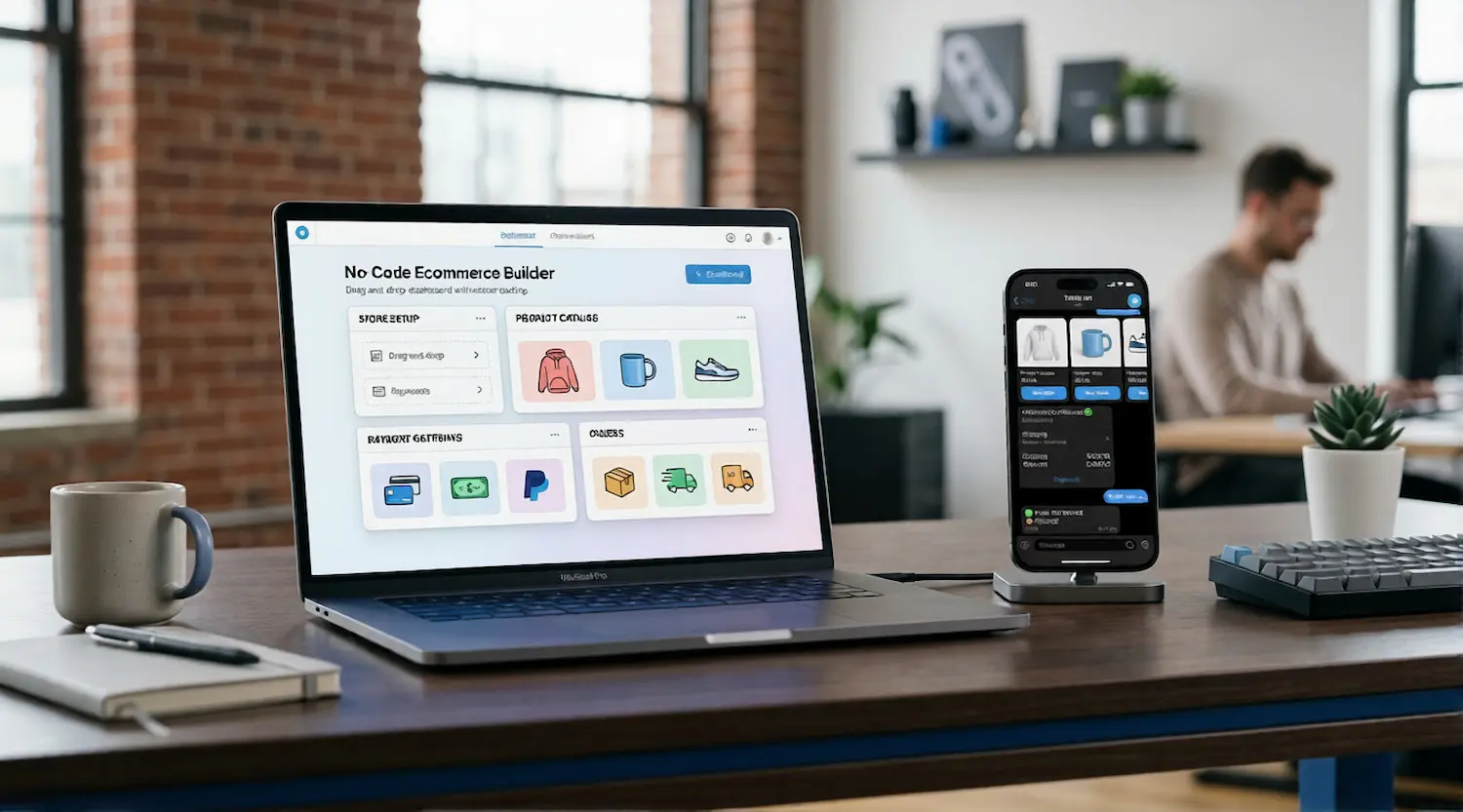
If you want to launch a Telegram Bot Shop without turning every small change into a developer task, choosing the right builder matters more than most teams expect.
A lot of tools can help you create menus, automate replies, or connect simple bot actions. That is not the same as having a real e-commerce setup. A proper Telegram shop builder should help you move from product discovery to checkout, payment, order handling, and follow-up without breaking the customer experience.
That is where many teams get stuck. They pick a tool that looks easy at the beginning, then realize they still need manual payment confirmations, spreadsheet-based order tracking, or extra work every time they add a product, update pricing, or fix a checkout step.
If your goal is to launch fast and sell with less friction, these are the Telegram shop builder features you should expect from day one.
Why the right Telegram shop builder matters
A Telegram store is not just a bot with buttons.
It is a sales system inside chat. That means the builder you choose affects how quickly you can launch, how easily customers can buy, how much manual work your team carries, and how easy it will be to improve performance later.
The wrong setup usually creates one of two problems:
- the store launches fast, but operations become messy
- the store is technically powerful, but too slow or complex to launch
The right balance is a builder that keeps setup simple without sacrificing the parts that actually drive revenue: catalog clarity, checkout speed, trusted payments, order visibility, and post-purchase communication.
If you are still early, this is also the stage where it helps to learn how to create a Telegram shop without coding before adding more complexity.
What makes a Telegram shop builder different from a generic bot tool
A generic bot tool can automate messages. A real shop builder needs to support commerce.
That means it should help you manage the full buying journey:
- product browsing
- category structure
- variant selection
- checkout flow
- payment confirmation
- order updates
- customer support touchpoints
- repeat purchase opportunities
If a platform only helps you build menus and simple bot logic, you may still end up doing the most important ecommerce work by hand.
That is why a serious Telegram bot store setup should be judged like a revenue channel, not like a chatbot experiment.
Telegram shop builder features you should expect from day one
1. No-code setup that does not break every time you need a change
A no-code Telegram shop builder should let you launch without relying on custom development for every update.
That includes things like:
- adding or editing products
- changing prices
- updating categories
- adjusting checkout steps
- updating messages and flows
If basic edits still require technical help, the tool may be marketed as simple, but it is not operationally simple.
2. Product catalog management built for fast decisions
A store without a clean catalog creates hesitation.
Your builder should let you organize products in a way that feels obvious on mobile:
- clear categories
- short product names
- easy variant selection
- visible pricing
- concise descriptions focused on the buyer decision
A messy catalog slows down everything. This is also why your telegram store product catalog structure deserves real attention, not just a quick upload of products.
3. Checkout flow that feels short, clear, and trustworthy
Checkout is where interest becomes revenue.
A strong builder should help you create a checkout that is:
- short
- mobile-friendly
- easy to understand
- clear about what happens next
Good checkout design usually means fewer fields, one clear action per step, visible totals, and an instant confirmation after payment.
If you want buyers to move quickly, the builder should reduce friction, not add more clicks.
4. Payment integrations your customers already trust
One of the biggest decision filters is simple: can the store support the payment methods your audience actually wants to use?
A Telegram shop builder should make it easier to accept payments in Telegram without turning payment status into a manual support problem.
Look for a setup that helps you handle:
- trusted payment methods
- clear payment confirmation
- failed payment recovery
- post-payment communication
If the payment experience feels uncertain, conversion suffers even when the product offer is strong.
5. Order dashboard and status visibility
After payment, operations start.
You need to know what was paid, what is pending, what was delivered, and what needs attention. If you cannot see order status clearly, you do not have a scalable workflow. You have hidden friction.
A good builder should make it easy to track:
- new orders
- paid orders
- pending actions
- fulfillment stage
- exceptions that need support
This matters even more once order volume starts growing.
6. Automation for repetitive operational work
A store should not become a manual admin job.
The right builder should support automation for the moments that repeat every day:
- new order alerts
- payment confirmations
- shipping or delivery updates
- failed payment reminders
- post-purchase follow-up
- re-engagement messages
This is often the difference between a small team that stays fast and one that spends the day reacting to avoidable tasks.
7. Analytics that help you improve, not just “report”
Many tools say they have analytics. What matters is whether the data is useful.
A builder should help you understand where users drop and what needs fixing. At minimum, you should be able to see:
- checkout starts
- completed payments
- failed payments
- top products
- repeat buyers
- drop-off points in the buying flow
Without that, you are guessing. And guessing is expensive when you want your first 100 sales with a Telegram store.
8. Team access and support workflow control
Even small teams need clarity on who can do what.
As soon as more than one person touches the store, access control matters. A good builder should support:
- team roles
- permissions
- basic workflow control
- human support handoff when needed
This keeps customer experience cleaner and reduces internal confusion.
9. API and integrations for the next stage of growth
Not every business needs advanced integrations on day one. But you do not want to rebuild your system just because growth makes your setup more demanding.
A strong Telegram shop builder should at least leave the door open for:
- external workflows
- custom integrations
- event handling
- operational extensions
This is especially important if you are comparing a focused no-code setup against custom Telegram bot development. The question is not only what works now. It is what keeps working when the store becomes more operationally serious.
10. Security and reliability that support trust
Customers do not separate “operations” from “trust.” If payment feels unclear or order handling looks inconsistent, confidence drops.
Look for a builder that treats security and reliability as part of the buying experience, not as a hidden technical detail.
That includes:
- secure checkout
- protected credentials
- clear order communication
- stable performance under normal growth
Red flags to watch before choosing a platform
Not every builder that looks easy is the right fit.
Be careful if the tool:
- focuses more on chat automation than ecommerce flow
- has weak payment confirmation logic
- lacks an order dashboard
- makes you track fulfillment outside the system
- gives little visibility into conversion or drop-off
- offers no clean way to manage support or team access
- looks cheap at first, but adds operational cost later
A builder should remove complexity, not move it somewhere else.
A simple way to compare options
Before choosing a tool, score each platform against this checklist:
- Can I launch without coding?
- Can I manage catalog and pricing easily?
- Can customers check out with low friction?
- Can I accept payments with confidence?
- Can I see orders clearly after payment?
- Can I automate repetitive tasks?
- Can I track what is working?
- Can my team operate it without chaos?
- Can this setup grow without a rebuild?
If too many answers are “not really,” keep looking.
That is also a useful way to frame the decision if you are debating Telegram shop vs Shopify or evaluating whether a simpler Telegram-first setup is the better fit for your business model.
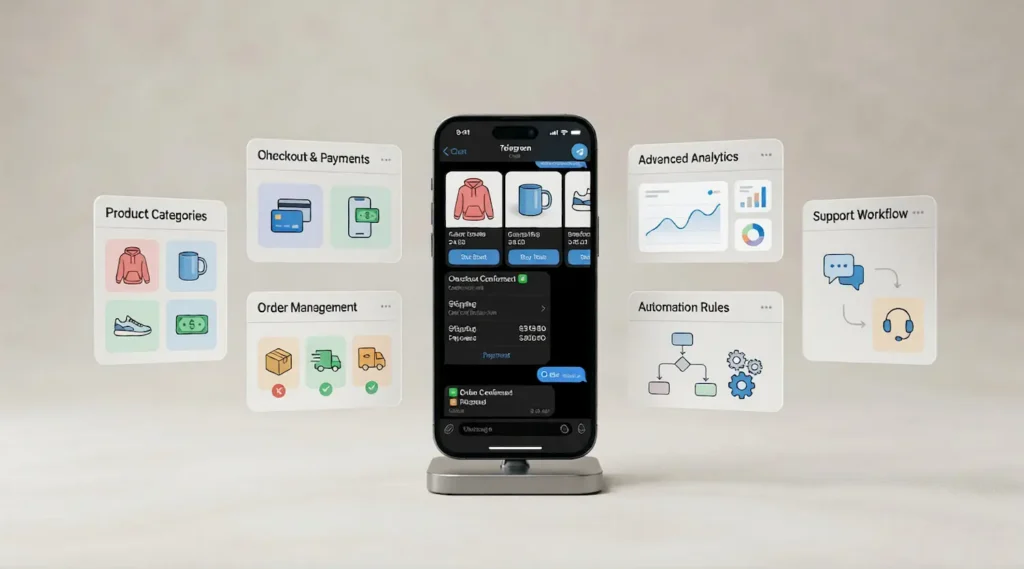
When a no-code Telegram shop builder is the right choice
A no-code setup is usually the best fit when you want to:
- launch quickly
- validate an offer faster
- reduce technical dependency
- keep operations lean
- improve the store weekly instead of rebuilding monthly
It is especially attractive for small businesses and lean teams that want a real sales flow inside Telegram, not a side project that takes too long to maintain.
The goal is not just to “have a bot.” The goal is to have a store system you can actually operate.
Build once. Sell sooner.
The best telegram shop builder features are not the ones that sound impressive in a sales page. They are the ones that make launching easier, buying smoother, and daily operations lighter.
That is the real test.
If a platform helps you go live without coding, handle payments cleanly, manage orders without spreadsheets, and improve performance without constant technical fixes, you are much closer to building a Telegram Bot Shop that can actually grow.
And if you want a faster path to that setup, complete the Trapyfy Store Onboarding Intake. It is the simplest next step if you want to map the right store structure, checkout flow, payment setup, and operational logic before launch.
Leave a Reply