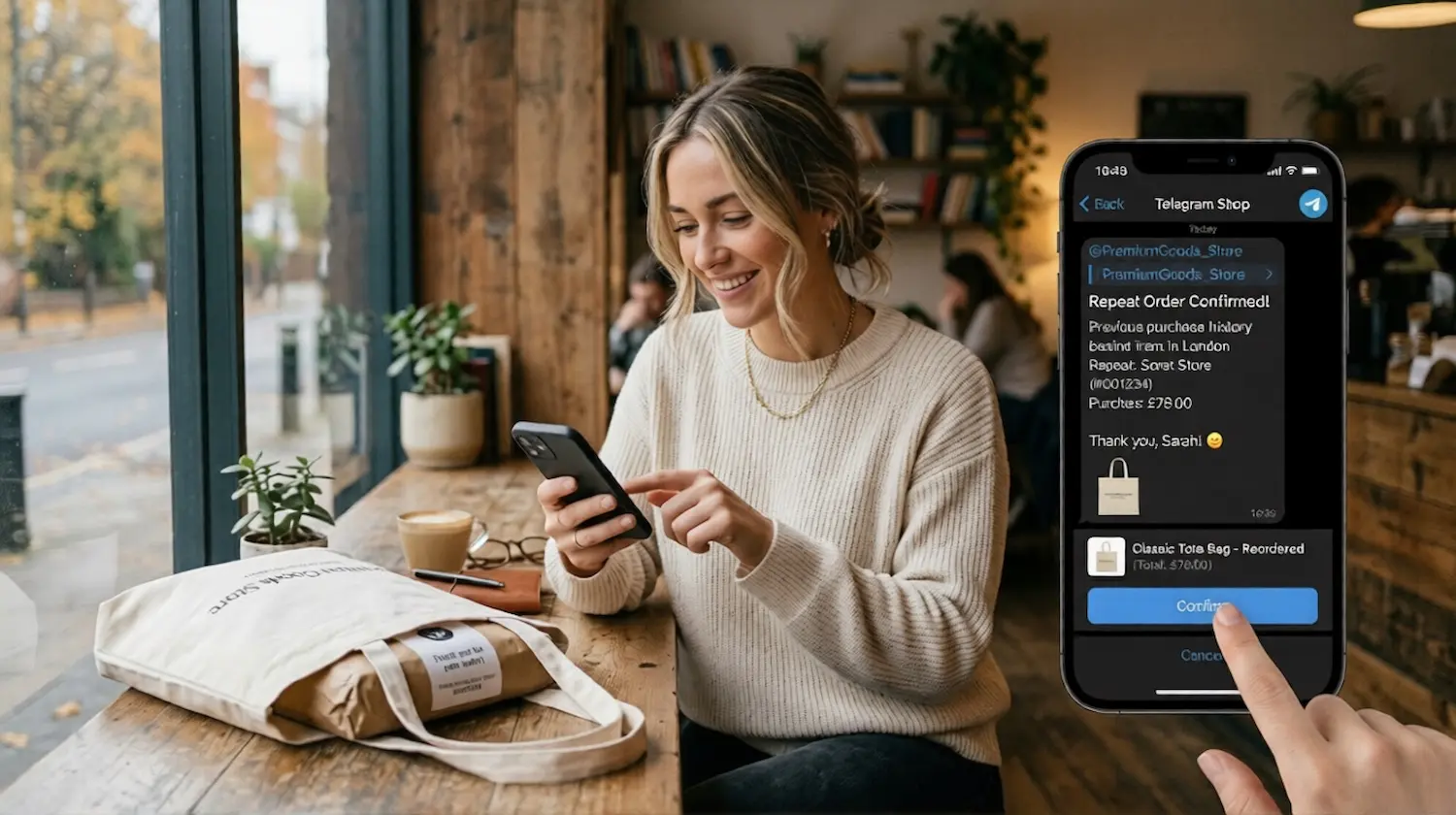
Getting a first sale always feels like proof of life. It tells you the offer can attract attention, the product can convert, and the buying journey is strong enough to persuade someone to complete an order. But a Telegram shop does not become commercially stronger because a few customers buy once. It becomes more resilient when those first-time buyers come back, buy again, and begin to trust the store as part of their normal purchasing behaviour.
That is where telegram shop loyalty stops being a vague retention idea and starts becoming a practical growth lever. Loyalty is not only about rewards, points, or occasional discounts. In a Telegram-based store, it is about reducing friction after the first purchase, keeping the relationship active, and giving customers a reason to return without making every sale depend on another push for fresh traffic.
If the store is already investing in acquisition, referrals, or early traction, loyalty is the stage that gives those efforts more long-term value. Bringing people in matters. Giving them a reason to stay matters even more.
Why loyalty matters so much in a Telegram shop
Telegram shops operate in a different rhythm from more conventional ecommerce sites. The environment is more direct, more conversational, and often more immediate. That creates an advantage many merchants underestimate: retention can feel much more natural here than it does in channels where every follow-up message competes with an overcrowded inbox.
A customer in a Telegram shop does not always disappear after landing on a product page. They are often already inside a communication space where updates, reminders, product prompts, and post-purchase interactions can continue without feeling disconnected from the shopping experience. Used properly, that creates a shorter path between the first order and the second.
That is why loyalty in Telegram commerce should not be treated as something bolted on at the end. The strongest stores build repeat-purchase conditions into the experience itself: how they message customers, how they handle reorders, how they follow up after delivery, and how they make the next step feel easy rather than forced.
And when a store is already generating traction through referral-led Telegram growth, loyalty is what turns that traffic into something more valuable over time.
What telegram shop loyalty actually looks like
Many merchants hear the word loyalty and immediately think about a points system. But points alone rarely solve the real retention problem.
In practice, telegram shop loyalty usually comes from a combination of smaller things done well: a smooth first-order experience, clear post-purchase communication, frictionless reordering, relevant follow-up offers, and incentives that encourage a second purchase without cheapening the brand.
Customers become loyal when coming back feels easy, worthwhile, and well timed. That is the real standard. The goal is not simply to “have a loyalty system.” It is to create the kind of experience customers feel comfortable returning to.
Start with the second purchase, not just the first
A lot of shops pour their energy into getting the first order, which makes sense in the early stages. But it can also create a blind spot.
The second purchase is often the real test of whether the first one created enough trust and value to justify coming back. Before building elaborate retention mechanics, it is worth asking a simpler question: what happens between order one and order two?
If the customer buys once and hears almost nothing afterwards, loyalty stays weak. If the only follow-up is generic promotion with no timing or context, loyalty stays weak. If the customer wants to reorder but the process feels awkward, loyalty stays weak.
That is why the most effective retention tactics usually begin in the immediate post-purchase journey. The store has already earned attention. Now it needs to earn a return.
Build a post-purchase flow that actually helps
One of the biggest strengths of Telegram commerce is that follow-up communication can feel more direct and more personal than it does in traditional email-led ecommerce. But that only works when the messages are useful.
A good post-purchase flow should do more than confirm payment. It should reassure the buyer, set clear expectations, and create the right conditions for the next action. That might mean delivery updates, reorder reminders, product guidance, or subtle prompts that reward a positive first experience without overwhelming the customer.
The tone matters as much as the timing. Customers should feel supported, not chased. The best message flows feel like part of a well-run store, not a stream of sales pressure.
This becomes much easier when your Telegram bot store structure is built around customer actions instead of random announcements.
Reward the next order, not endless discounting
A weak loyalty strategy gives away value too early and too often. A stronger one focuses on the behaviour it wants to reinforce.
In most Telegram shops, the most important first loyalty action is not getting customers to join a rewards programme. It is getting them to buy again. That is why second-order incentives tend to outperform broad discounting. Instead of training people to wait for the next generic deal, you are giving them a commercially sensible reason to return while the first purchase still feels recent.
That incentive might take different forms depending on the store: a return-buyer offer, store credit, a bundle upgrade, access to selected products, or a reward unlocked after a successful second order. What matters is that the offer supports repeat behaviour without turning every transaction into a race to the lowest price.
Loyalty should increase customer value, not teach customers to buy only when the margin is weakest.
Connect loyalty with referrals instead of treating them separately
Referral and retention are often discussed as if they belong to different systems. In a Telegram shop, they tend to work better together.
A customer who buys again is usually more credible when recommending the store to someone else. At the same time, a referred customer who has a good first experience is easier to retain. This is where loyalty becomes part of a wider commercial loop: referrals bring in the first order, the first order creates trust, trust supports the second purchase, and repeat buyers become stronger referrers.
Seen that way, loyalty is not simply a reward mechanic. It is one of the things that gives the full customer journey more weight. If the acquisition side of the store already leans on Telegram referral bot comparisons and referral mechanics, the next step is making sure those customers are worth more after they arrive.
Make reordering frictionless
A customer may be willing to come back, but willingness alone is never enough if the process feels inconvenient.
Reordering is one of the most overlooked parts of retention. A Telegram shop that wants repeat customers should make the second or third order feel easier than the first. That means reducing unnecessary decisions, simplifying the path back to checkout, and making product availability and payment feel clear.
Operational clarity matters here just as much as messaging. Even strong retention campaigns will struggle if the buying flow breaks trust. Customers are far more likely to return when the store gives them a reliable path from intent to payment, especially when the process behind how to accept payments in Telegram feels smooth rather than uncertain.
Shape follow-up offers around behaviour
Not every customer should receive the same message at the same time. That is one of the simplest truths in retention, and one of the most ignored.
Some customers need a reorder reminder. Others need reassurance after the first order. Some respond better to product pairing, while others are more likely to return because of exclusivity or convenience rather than discounts. Loyalty tactics get better when they are shaped around behaviour instead of sent as a single generic flow.
The useful signals are rarely mysterious. Time since last order, purchase type, order value, referral source, and previous response to offers all help determine what kind of follow-up is likely to feel relevant. In a direct channel like Telegram, relevance matters even more, because weak messaging feels intrusive much faster.
Turn trust into retention through consistency
Loyalty is rarely built by one campaign. More often, it is built through repetition.
Customers come back when the store proves, over time, that it is reliable. They know what kind of experience to expect. They trust the delivery updates, the product quality, the communication, the support, and the payment process. That predictability matters far more than many merchants realise.
This is why retention is not only about promotions or rewards. It is also about the store fundamentals: clean navigation, dependable visibility of products, realistic product messaging, clear order handling, and support that feels responsive when something needs attention.
A Telegram shop that wants stronger retention usually needs the operational side to feel just as dependable as the marketing side, including more consistent Telegram inventory management and a store experience that supports repeat orders rather than one-off transactions.
Match loyalty tactics to the stage of the store
Not every Telegram shop needs the same kind of loyalty system.
If the store is still early, the smartest move is often to focus on the basics: a strong first-order experience, a clear post-purchase flow, and one sensible reason to come back. If the shop is more mature, it may be ready for more layered tactics such as segmented rewards, referral-to-loyalty bridges, or retention offers based on customer behaviour.
The mistake is trying to launch a large loyalty framework before the foundations are stable. Loyalty tends to perform far better in shops that already have a clear structure behind them. When the buying journey, store setup, and early sales process still feel uncertain, retention tactics almost always underperform.
That is why so much of loyalty depends on basics that seem unrelated at first glance: a clearer store setup, smoother buying paths, and a more dependable route from initial interest to repeat purchase.
Measure loyalty with commercial metrics, not vague engagement
If retention matters, it needs to be measured properly.
The most useful loyalty indicators are rarely vanity metrics. Message opens may tell you something about visibility, but they do not tell you whether customers are actually becoming more valuable. The stronger metrics are the ones tied to buying behaviour: repeat purchase rate, time between first and second order, revenue from returning customers, second-order conversion, and the performance of reorder prompts or loyalty offers.
The exact mix depends on the store model, but the principle is straightforward. Loyalty should be measured in customer behaviour, not just message activity.
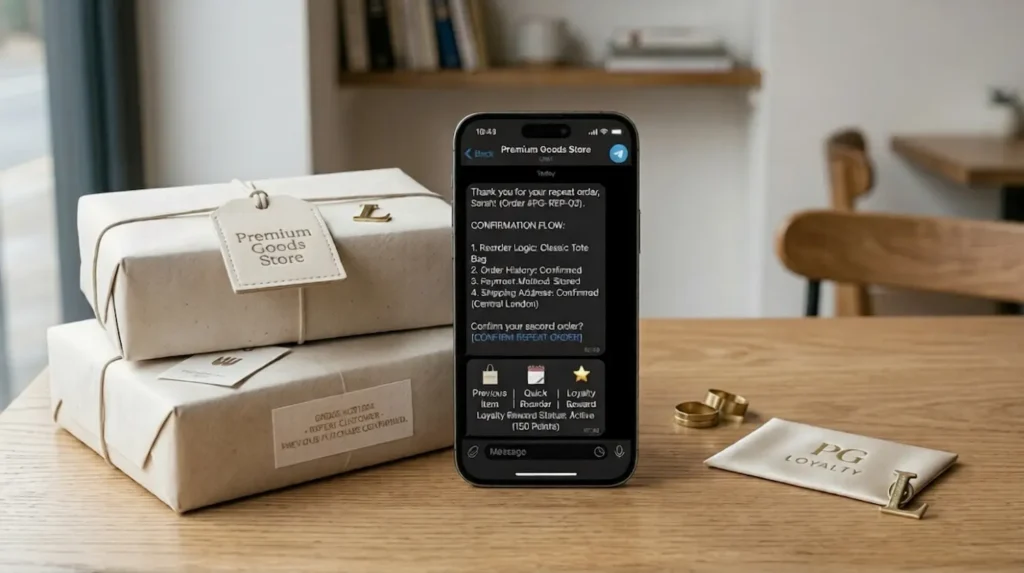
Where Trapyfy fits into telegram shop loyalty
A loyalty strategy becomes much easier to execute when the store is already built for structured growth. That means you are not trying to force retention into a messy setup. You are working with a shop that can support clearer customer flows, smoother reorders, and better visibility over how customers move from first order to second.
That is where Trapyfy becomes relevant. Loyalty in Telegram commerce is not only about adding a reward or sending another message. It is about creating a shop environment where customers can buy smoothly, hear from the store at the right moments, and return without friction.
When a business wants to improve acquisition, repeat purchase, and retention in the same ecosystem, Trapyfy offers a stronger starting point than trying to patch those pieces together after launch.
Loyalty is what makes growth more durable
Acquisition can bring attention. Referrals can bring new buyers. Promotions can create spikes. But loyalty is what turns those early wins into something more durable.
A Telegram shop does not become stronger because people notice it once. It becomes stronger when customers return with less hesitation, buy with more trust, and begin to see the store as worth coming back to.
That is why telegram shop loyalty is not a side topic. It is one of the clearest ways to move from isolated first orders to a healthier, more stable customer base.
Leave a Reply