Author: trapyfy

  • Upsells & Bundles Inside Telegram: Increase AOV Without Annoying Users

    Upsells & Bundles Inside Telegram: Increase AOV Without Annoying Users

    A telegram store upsell should feel helpful, not intrusive. That is the real difference between a store that increases average order value and a store that quietly trains buyers to ignore extra offers.

    Inside Telegram, that distinction matters even more. The interface is fast, conversational, and compact. People do not enter a Telegram shop expecting a long e-commerce funnel filled with pop-ups, distractions, or aggressive cross-sell blocks. They expect speed, clarity, and an easy path to checkout. That means merchants need a different approach when they want to increase basket size.

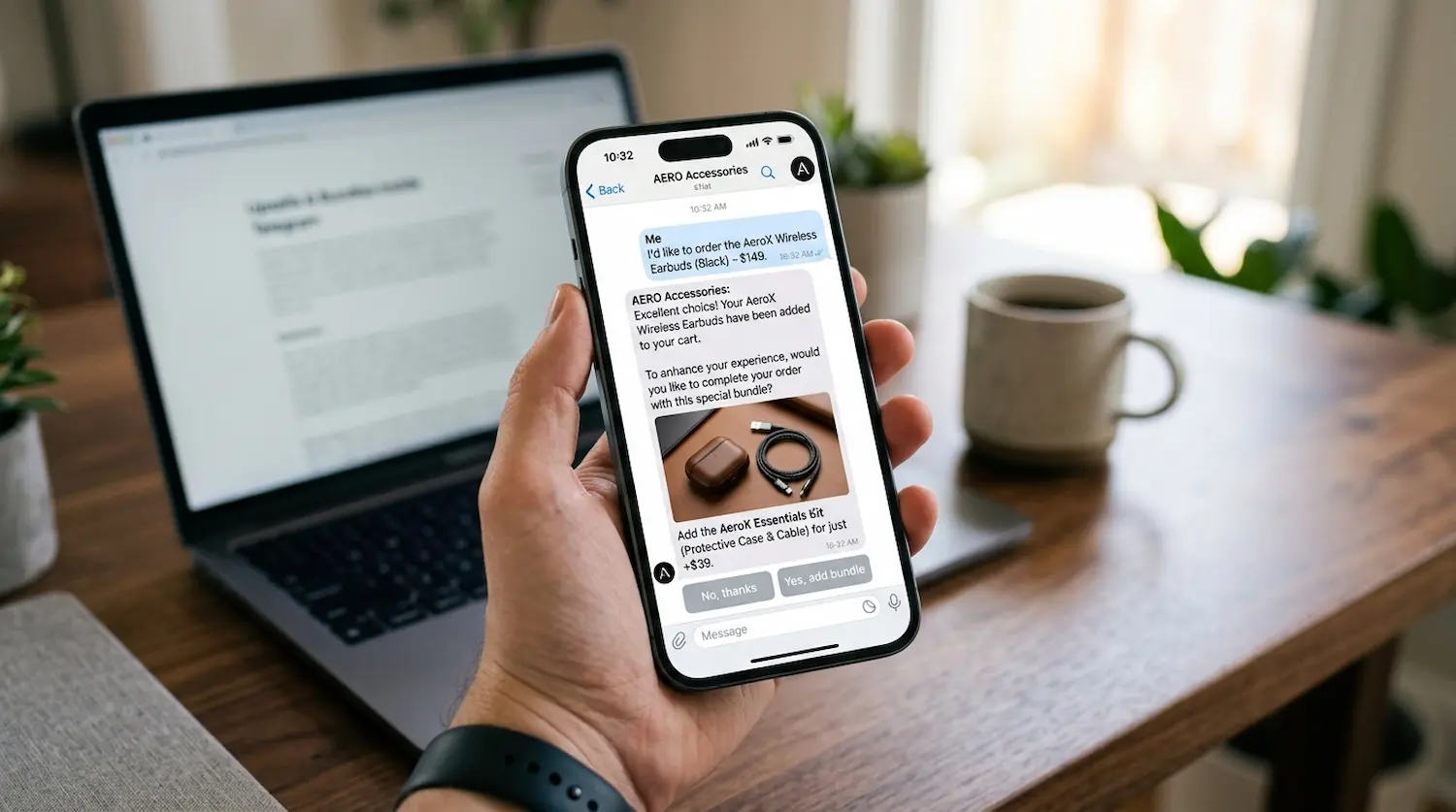
    Used well, a telegram store upsell can lift order value by making the next best choice obvious. It can help a buyer add a complementary item, move to a better-value bundle, or choose a more complete order without feeling pushed. Used badly, it creates friction, slows the flow, and makes the shop feel transactional in the worst way.

    The goal is not to sell more at any cost. The goal is to make the order more useful for the buyer while making each checkout more valuable for the store.

    What a telegram store upsell should actually do

    A telegram store upsell is not just an extra product shown at the end of the journey. It is a structured offer presented at the right moment, with the right logic, for the right reason.

    In practice, that usually means one of three things:

    • encouraging the buyer to add a complementary product
    • offering a bundle with a clearer value proposition
    • upgrading the buyer from a basic choice to a more complete one

    That sounds simple, but many Telegram merchants get it wrong because they treat upsells as a revenue trick rather than part of the buying experience. Buyers respond much better when the offer answers a practical question:

    What else do I need?
    What is the smarter version of this purchase?
    Is there a better value option here?

    When the answer is clear, the upsell feels useful. When it is vague, repetitive, or unrelated, it feels like noise.

    Why bundles often work better than aggressive upsells in Telegram

    For many stores, bundles convert better than hard upsell prompts because bundles reduce decision fatigue. Instead of asking the buyer to make one more choice after another, you present a cleaner package from the start.

    This matters in Telegram because buyers are often moving quickly through menus, product options, and confirmation steps. A cluttered journey hurts momentum. A good bundle simplifies it.

    For example, instead of selling three related items separately and trying to push each one with a separate telegram store upsell, you can present one grouped offer with a clear benefit:

    • starter bundle
    • best-selling combination
    • repeat customer bundle
    • gift-ready bundle
    • premium option with a better per-item value

    This works especially well when the offer helps the buyer avoid uncertainty. A customer who is not sure what to choose is often more willing to buy a bundle that feels curated and complete.

    That is also why upsell logic should connect closely with your Telegram checkout optimisation work. If the buying flow already feels smooth, a well-placed bundle increases value without breaking momentum. If the checkout is messy, even a good offer can feel like a delay.

    The best moments to place a telegram store upsell

    Timing matters more than volume. Most merchants do not have an upsell problem. They have a placement problem.

    A telegram store upsell usually performs best when it appears at one of these stages:

    1. After product selection, before checkout

    This is often the cleanest moment. The buyer has shown intent but has not completed payment yet. They are still open to improving the order, especially if the extra item is clearly relevant.

    This is where complementary add-ons work best. The offer should be short, visually easy to process, and tied to what the buyer already selected.

    2. At bundle selection stage

    Some shops benefit from showing bundles before the user drills into individual items. That works well when product discovery is part of the challenge and the buyer would benefit from a guided choice.

    In this case, the telegram store upsell is less about “add one more thing” and more about “choose the smarter combination now”.

    3. Immediately after purchase confirmation

    This only works if it feels lightweight and optional. A post-purchase offer can be effective for repeatable or highly compatible items, but it should never feel like the customer has been dropped into another funnel straight after paying.

    If the tone changes from helpful to pushy, trust drops fast.

    What makes an upsell feel useful instead of annoying

    A strong telegram store upsell respects buyer intent. It does not interrupt it blindly.

    Here are the principles that matter most:

    Relevance first

    The offer should match what the customer is already trying to do. If someone chooses a product for a specific use case, the add-on or bundle should support that use case directly.

    One clear benefit

    Do not overload the prompt. The buyer should understand the value instantly. Better convenience, better price efficiency, better completeness, or better results. Pick one.

    Limited choice

    Too many options weaken the upsell. One well-positioned recommendation usually works better than multiple competing suggestions.

    Fast interaction

    Telegram is not the place for long-winded persuasion. The format should help the buyer act quickly.

    Easy refusal

    This is overlooked, but important. A user who can decline easily is less likely to feel manipulated. A confident offer does not need to trap the buyer.

    If you are already reviewing your store flow from product discovery to payment, this should sit alongside your work on order management inside Telegram and overall buyer experience. Revenue grows more reliably when the store feels operationally sharp, not just commercially aggressive.

    Types of bundles that work well inside Telegram shops

    Not every bundle deserves to exist. The best ones solve a buying problem.

    Here are the most commercially useful bundle types for Telegram stores:

    Starter bundles

    These help first-time buyers who want a guided entry point. The value comes from simplicity and confidence.

    Best-seller bundles

    These use proven demand patterns and reduce hesitation. They work especially well when customers want the “safe choice”.

    Usage-based bundles

    These group items based on how the buyer will actually use them. This makes the offer feel more intentional and practical.

    Tiered bundles

    These allow the buyer to choose between basic, better, and premium combinations. This is one of the cleanest ways to increase AOV without relying on a hard telegram store upsell at the final step.

    Seasonal or campaign bundles

    These can work well for launches, promotions, or temporary pushes, but only if the offer still feels coherent. A random discount stack is not a real bundle strategy.

    How to increase AOV without damaging trust

    The fastest way to weaken an upsell strategy is to optimise only for immediate order value and ignore user experience.

    A telegram store upsell should protect trust in three ways.

    First, it should make sense in context. Buyers notice when stores push irrelevant extras just because they can.

    Second, it should not appear too often. If every step contains another recommendation, the experience starts to feel tiring rather than guided.

    Third, it should align with the tone of the brand. A Telegram shop works because it feels direct and accessible. Overdesigned upsell behaviour can break that advantage.

    This is where performance tracking matters. You cannot improve upsells well if you only look at revenue in isolation. You also need to watch user drop-off, refusal patterns, bundle uptake, and repeat purchase behaviour. That is why stores with a stronger Telegram shop analytics setup are usually better at refining monetisation without creating friction.

    Common mistakes merchants make with telegram store upsell flows

    A lot of upsell logic fails for very predictable reasons.

    Showing irrelevant add-ons

    If the extra item does not feel connected, buyers ignore it or get annoyed by it.

    Offering too many products

    A Telegram interface rewards focus. Too much choice slows the user down.

    Repeating the same prompt everywhere

    The same telegram store upsell shown again and again loses impact quickly.

    Hiding the main path to purchase

    An upsell should support conversion, not compete with it.

    Building bundles that complicate fulfilment

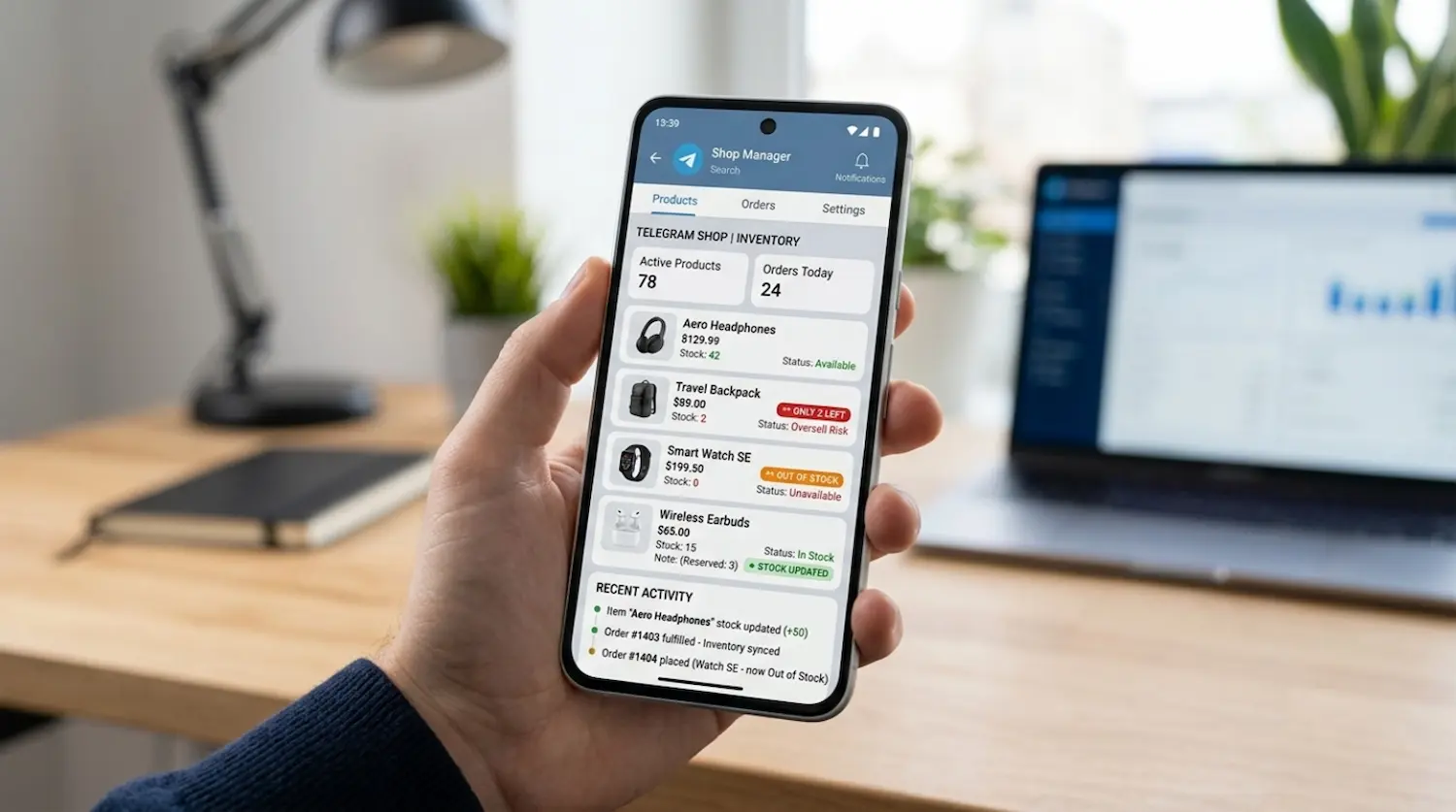
    A bundle may look attractive in the front-end but create stock, packaging, or fulfilment issues behind the scenes. This is why upsell strategy should stay connected to your Telegram inventory management logic. A high-converting bundle is not actually efficient if it creates constant back-end problems.
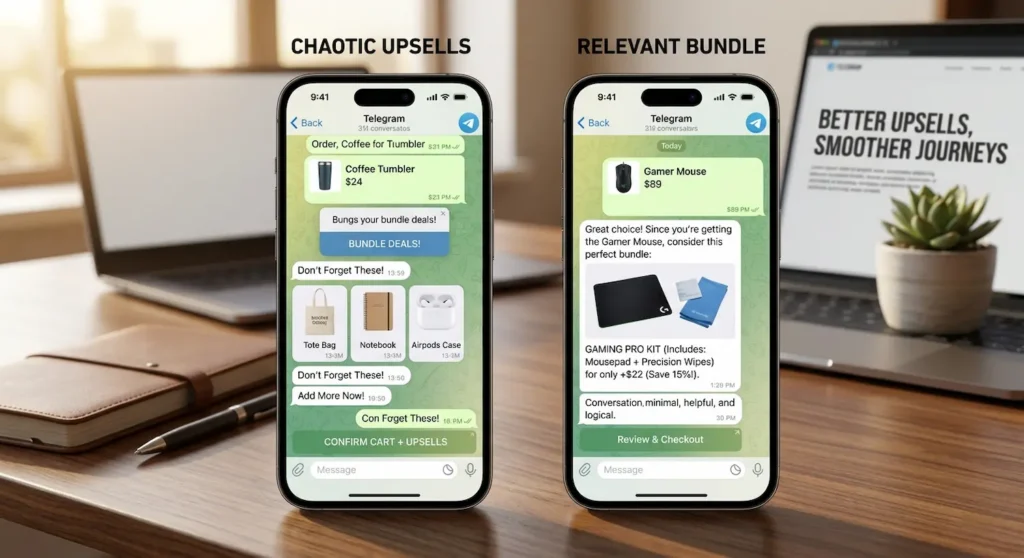
    Comparison of annoying and user-friendly telegram store upsell flows inside a Telegram shop

    How to build better upsell logic inside a Telegram store

    The most effective approach is usually the simplest one.

    Start with your top products and ask:

    • what is the most natural add-on for this item?
    • what combination would make the purchase easier or better value?
    • where does the buyer usually hesitate?
    • which bundle would reduce that hesitation rather than add to it?

    Then build from real buying behaviour, not guesswork.

    A good telegram store upsell system is usually based on a small number of high-intent offers, not a huge catalogue of promotional prompts. The point is not to make every basket larger. The point is to create better opportunities where the logic is strong enough to convert naturally.

    Over time, that also supports better retention. Buyers are more likely to come back when their first purchase felt smooth, relevant, and easy to complete.

    The commercial advantage of getting this right

    Telegram shops are often praised for speed, direct access, and strong community-driven selling. But that speed should not come at the expense of commercial depth.

    A store that only processes one-item purchases leaves money on the table. A store that pushes too hard loses trust. The real opportunity sits in the middle: thoughtful monetisation that improves the order without disrupting the buyer.

    That is where a well-designed telegram store upsell strategy becomes valuable. It helps merchants increase AOV in a way that still feels native to Telegram. Not louder. Not more aggressive. Just smarter.

    If your team is refining how products are grouped, presented, and sold inside Telegram, this is the right stage to think beyond single-item transactions. Bundles, contextual upgrades, and better-timed recommendations can make the store more profitable without making it more annoying.

    And if you are ready to turn that into a cleaner buying system, the next step is to start with the flow itself. The strongest upsells do not begin with a discount idea. They begin with a better store structure. For teams building that kind of experience, the Trapyfy Store Onboarding Intake is the most practical place to start.

  • Telegram Shop Loyalty Tactics: How to Turn First-Time Buyers Into Repeat Customers

    Telegram Shop Loyalty Tactics: How to Turn First-Time Buyers Into Repeat Customers

    Getting a first sale always feels like proof of life. It tells you the offer can attract attention, the product can convert, and the buying journey is strong enough to persuade someone to complete an order. But a Telegram shop does not become commercially stronger because a few customers buy once. It becomes more resilient when those first-time buyers come back, buy again, and begin to trust the store as part of their normal purchasing behaviour.

    That is where telegram shop loyalty stops being a vague retention idea and starts becoming a practical growth lever. Loyalty is not only about rewards, points, or occasional discounts. In a Telegram-based store, it is about reducing friction after the first purchase, keeping the relationship active, and giving customers a reason to return without making every sale depend on another push for fresh traffic.

    If the store is already investing in acquisition, referrals, or early traction, loyalty is the stage that gives those efforts more long-term value. Bringing people in matters. Giving them a reason to stay matters even more.

    Why loyalty matters so much in a Telegram shop

    Telegram shops operate in a different rhythm from more conventional ecommerce sites. The environment is more direct, more conversational, and often more immediate. That creates an advantage many merchants underestimate: retention can feel much more natural here than it does in channels where every follow-up message competes with an overcrowded inbox.

    A customer in a Telegram shop does not always disappear after landing on a product page. They are often already inside a communication space where updates, reminders, product prompts, and post-purchase interactions can continue without feeling disconnected from the shopping experience. Used properly, that creates a shorter path between the first order and the second.

    That is why loyalty in Telegram commerce should not be treated as something bolted on at the end. The strongest stores build repeat-purchase conditions into the experience itself: how they message customers, how they handle reorders, how they follow up after delivery, and how they make the next step feel easy rather than forced.

    And when a store is already generating traction through referral-led Telegram growth, loyalty is what turns that traffic into something more valuable over time.

    What telegram shop loyalty actually looks like

    Many merchants hear the word loyalty and immediately think about a points system. But points alone rarely solve the real retention problem.

    In practice, telegram shop loyalty usually comes from a combination of smaller things done well: a smooth first-order experience, clear post-purchase communication, frictionless reordering, relevant follow-up offers, and incentives that encourage a second purchase without cheapening the brand.

    Customers become loyal when coming back feels easy, worthwhile, and well timed. That is the real standard. The goal is not simply to “have a loyalty system.” It is to create the kind of experience customers feel comfortable returning to.

    Start with the second purchase, not just the first

    A lot of shops pour their energy into getting the first order, which makes sense in the early stages. But it can also create a blind spot.

    The second purchase is often the real test of whether the first one created enough trust and value to justify coming back. Before building elaborate retention mechanics, it is worth asking a simpler question: what happens between order one and order two?

    If the customer buys once and hears almost nothing afterwards, loyalty stays weak. If the only follow-up is generic promotion with no timing or context, loyalty stays weak. If the customer wants to reorder but the process feels awkward, loyalty stays weak.

    That is why the most effective retention tactics usually begin in the immediate post-purchase journey. The store has already earned attention. Now it needs to earn a return.

    Build a post-purchase flow that actually helps

    One of the biggest strengths of Telegram commerce is that follow-up communication can feel more direct and more personal than it does in traditional email-led ecommerce. But that only works when the messages are useful.

    A good post-purchase flow should do more than confirm payment. It should reassure the buyer, set clear expectations, and create the right conditions for the next action. That might mean delivery updates, reorder reminders, product guidance, or subtle prompts that reward a positive first experience without overwhelming the customer.

    The tone matters as much as the timing. Customers should feel supported, not chased. The best message flows feel like part of a well-run store, not a stream of sales pressure.

    This becomes much easier when your Telegram bot store structure is built around customer actions instead of random announcements.

    Reward the next order, not endless discounting

    A weak loyalty strategy gives away value too early and too often. A stronger one focuses on the behaviour it wants to reinforce.

    In most Telegram shops, the most important first loyalty action is not getting customers to join a rewards programme. It is getting them to buy again. That is why second-order incentives tend to outperform broad discounting. Instead of training people to wait for the next generic deal, you are giving them a commercially sensible reason to return while the first purchase still feels recent.

    That incentive might take different forms depending on the store: a return-buyer offer, store credit, a bundle upgrade, access to selected products, or a reward unlocked after a successful second order. What matters is that the offer supports repeat behaviour without turning every transaction into a race to the lowest price.

    Loyalty should increase customer value, not teach customers to buy only when the margin is weakest.

    Connect loyalty with referrals instead of treating them separately

    Referral and retention are often discussed as if they belong to different systems. In a Telegram shop, they tend to work better together.

    A customer who buys again is usually more credible when recommending the store to someone else. At the same time, a referred customer who has a good first experience is easier to retain. This is where loyalty becomes part of a wider commercial loop: referrals bring in the first order, the first order creates trust, trust supports the second purchase, and repeat buyers become stronger referrers.

    Seen that way, loyalty is not simply a reward mechanic. It is one of the things that gives the full customer journey more weight. If the acquisition side of the store already leans on Telegram referral bot comparisons and referral mechanics, the next step is making sure those customers are worth more after they arrive.

    Make reordering frictionless

    A customer may be willing to come back, but willingness alone is never enough if the process feels inconvenient.

    Reordering is one of the most overlooked parts of retention. A Telegram shop that wants repeat customers should make the second or third order feel easier than the first. That means reducing unnecessary decisions, simplifying the path back to checkout, and making product availability and payment feel clear.

    Operational clarity matters here just as much as messaging. Even strong retention campaigns will struggle if the buying flow breaks trust. Customers are far more likely to return when the store gives them a reliable path from intent to payment, especially when the process behind how to accept payments in Telegram feels smooth rather than uncertain.

    Shape follow-up offers around behaviour

    Not every customer should receive the same message at the same time. That is one of the simplest truths in retention, and one of the most ignored.

    Some customers need a reorder reminder. Others need reassurance after the first order. Some respond better to product pairing, while others are more likely to return because of exclusivity or convenience rather than discounts. Loyalty tactics get better when they are shaped around behaviour instead of sent as a single generic flow.

    The useful signals are rarely mysterious. Time since last order, purchase type, order value, referral source, and previous response to offers all help determine what kind of follow-up is likely to feel relevant. In a direct channel like Telegram, relevance matters even more, because weak messaging feels intrusive much faster.

    Turn trust into retention through consistency

    Loyalty is rarely built by one campaign. More often, it is built through repetition.

    Customers come back when the store proves, over time, that it is reliable. They know what kind of experience to expect. They trust the delivery updates, the product quality, the communication, the support, and the payment process. That predictability matters far more than many merchants realise.

    This is why retention is not only about promotions or rewards. It is also about the store fundamentals: clean navigation, dependable visibility of products, realistic product messaging, clear order handling, and support that feels responsive when something needs attention.

    A Telegram shop that wants stronger retention usually needs the operational side to feel just as dependable as the marketing side, including more consistent Telegram inventory management and a store experience that supports repeat orders rather than one-off transactions.

    Match loyalty tactics to the stage of the store

    Not every Telegram shop needs the same kind of loyalty system.

    If the store is still early, the smartest move is often to focus on the basics: a strong first-order experience, a clear post-purchase flow, and one sensible reason to come back. If the shop is more mature, it may be ready for more layered tactics such as segmented rewards, referral-to-loyalty bridges, or retention offers based on customer behaviour.

    The mistake is trying to launch a large loyalty framework before the foundations are stable. Loyalty tends to perform far better in shops that already have a clear structure behind them. When the buying journey, store setup, and early sales process still feel uncertain, retention tactics almost always underperform.

    That is why so much of loyalty depends on basics that seem unrelated at first glance: a clearer store setup, smoother buying paths, and a more dependable route from initial interest to repeat purchase.

    Measure loyalty with commercial metrics, not vague engagement

    If retention matters, it needs to be measured properly.

    The most useful loyalty indicators are rarely vanity metrics. Message opens may tell you something about visibility, but they do not tell you whether customers are actually becoming more valuable. The stronger metrics are the ones tied to buying behaviour: repeat purchase rate, time between first and second order, revenue from returning customers, second-order conversion, and the performance of reorder prompts or loyalty offers.

    The exact mix depends on the store model, but the principle is straightforward. Loyalty should be measured in customer behaviour, not just message activity.

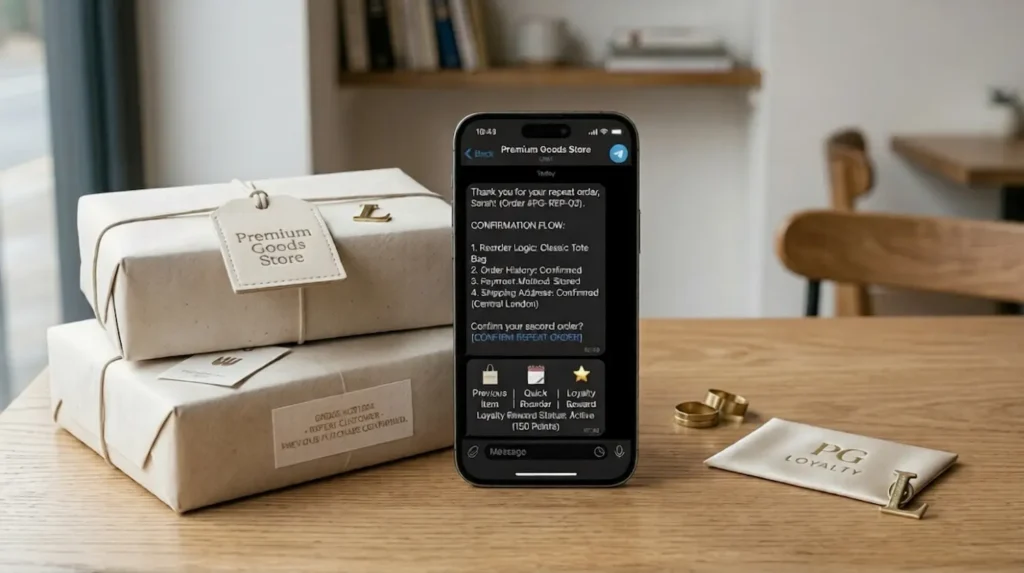
    Telegram shop loyalty visual showing repeat purchase flow, reorder prompts, and customer retention inside a Telegram store

    Where Trapyfy fits into telegram shop loyalty

    A loyalty strategy becomes much easier to execute when the store is already built for structured growth. That means you are not trying to force retention into a messy setup. You are working with a shop that can support clearer customer flows, smoother reorders, and better visibility over how customers move from first order to second.

    That is where Trapyfy becomes relevant. Loyalty in Telegram commerce is not only about adding a reward or sending another message. It is about creating a shop environment where customers can buy smoothly, hear from the store at the right moments, and return without friction.

    When a business wants to improve acquisition, repeat purchase, and retention in the same ecosystem, Trapyfy offers a stronger starting point than trying to patch those pieces together after launch.

    Loyalty is what makes growth more durable

    Acquisition can bring attention. Referrals can bring new buyers. Promotions can create spikes. But loyalty is what turns those early wins into something more durable.

    A Telegram shop does not become stronger because people notice it once. It becomes stronger when customers return with less hesitation, buy with more trust, and begin to see the store as worth coming back to.

    That is why telegram shop loyalty is not a side topic. It is one of the clearest ways to move from isolated first orders to a healthier, more stable customer base.

  • How to Add a Referral Program to a Telegram Store

    How to Add a Referral Program to a Telegram Store

    A referral program can be one of the simplest ways to turn satisfied customers into a repeatable acquisition channel. In a Telegram store, where community, direct communication, and fast checkout already sit close together, the opportunity is even stronger. The problem is that many referral setups stay too shallow. They reward clicks instead of purchases, attract low-quality traffic, or create abuse long before they create loyalty.

    That is why a good telegram store referral program needs to be designed as part of store operations, not added as a loose promotion on top. If the structure is right, referrals can help you lower friction for first-time buyers, reward existing customers with a reason to come back, and build a sales loop that feels native to Telegram rather than borrowed from somewhere else.

    Why a referral program fits a Telegram store so well

    Telegram stores already operate in an environment where direct sharing feels natural. Customers are already inside chats, private groups, communities, or one-to-one conversations. That changes how referrals spread.

    Instead of asking people to leave your ecosystem and share a generic link somewhere else, you are working inside a channel where discovery, recommendation, conversation, and checkout can happen much closer together. That makes referrals less about chasing reach and more about reducing distance between trust and purchase.

    This is especially valuable for stores that rely on repeat customers, community-led growth, or a product line that benefits from word-of-mouth. A referral program can support that by giving your existing buyers a clear reason to recommend the store at the moment when satisfaction is highest.

    It also works well when combined with a stronger Telegram store checkout flow, because the easier it is for referred users to move from recommendation to payment, the more likely the program is to produce actual sales rather than empty traffic.

    What a telegram store referral program should actually do

    A referral program is not just a code or a share link. It is a system with a commercial job to do.

    For a Telegram store, the program should help you:

    • bring in new customers through trusted recommendations
    • reward existing customers without eroding margins
    • encourage second and third purchases, not only first orders
    • track which referrals lead to real transactions
    • prevent abuse, duplicate claims, and low-quality signups

    If one of those pieces is missing, the program becomes fragile. You may see activity, but not necessarily growth.

    A good referral setup is measurable, tied to a clear commercial event, and aligned with how your store already sells. That usually means rewarding completed purchases rather than simple signups, and tying the experience into your wider Telegram store analytics and KPI tracking so you can see whether referrals are actually profitable.

    Start with the right referral model

    Before adding any automation, decide what kind of referral logic fits your store.

    1. Customer gets rewarded after a successful referred purchase

    This is usually the cleanest place to start. An existing buyer refers a friend. The new customer makes a purchase. The referrer receives a reward after the transaction is confirmed.

    This structure works because it ties the reward to real revenue. It also discourages low-intent behaviour, since the incentive is not triggered by a casual click.

    2. Both sides get rewarded

    This is common when you want to reduce hesitation for new buyers. The referred customer gets a first-order benefit, and the referrer receives a reward once the order is completed.

    This model often works well for Telegram stores because it gives both sides a reason to act. The new customer feels they are getting a clear benefit, while the existing customer feels their recommendation has value.

    3. Tiered referral rewards for repeat advocacy

    If your store has strong community behaviour or repeat purchase patterns, you can add levels. For example, one successful referral unlocks a small reward, three unlock a better one, and five unlock a premium benefit.

    That can be effective, but only if your fulfilment, customer history, and reward logic are already organised. If your operations are still maturing, it is better to begin with a simpler structure and expand later.

    Choose rewards that drive behaviour, not just attention

    The wrong reward can create noise. The right reward can reinforce lifetime value.

    For most Telegram stores, the best referral incentives are usually one of these:

    Discount on the next order

    Simple, clear, and easy to understand. This works well when your goal is not only acquisition but also repeat purchase.

    Store credit

    Often stronger than a generic discount because it keeps value inside the business. It also encourages customers to return and buy again.

    Free shipping or delivery upgrade

    Useful when shipping cost is a common objection and you want a reward that feels tangible without cutting too deeply into product pricing.

    Access-based rewards

    For stores with drops, member perks, or exclusive product moments, access can outperform discounts. This works particularly well when your store has community energy rather than purely transactional demand.

    What matters most is alignment. A referral reward should strengthen the kind of buying behaviour you want more of. If it only attracts bargain-seeking traffic, it may grow activity while weakening revenue quality.

    Build the referral flow around the customer journey

    A referral program performs better when it appears at the right moment, not everywhere at once.

    The strongest points to introduce referrals in a Telegram store are usually:

    After purchase confirmation

    This is when trust is highest. The customer has completed a transaction and is most likely to recommend the experience if it felt smooth.

    After delivery or successful fulfilment

    For stores where satisfaction depends on delivery, quality, or post-purchase experience, this may be even stronger than the checkout moment.

    Inside loyalty or repeat-customer messaging

    If you already segment returning buyers, referral invitations can become a natural extension of your retention flow rather than a one-off promotion.

    This is where a clear Telegram store order management workflow becomes useful. If your statuses, confirmation messages, and post-purchase sequences are organised, it becomes much easier to place referral prompts where they make commercial sense.

    Track referrals based on purchases, not vanity signals

    One of the biggest mistakes in referral marketing is celebrating the wrong numbers.

    A Telegram store referral program should not be judged mainly by how many people shared a link or opened a message. The real question is whether referred users became customers, how much they spent, and whether they came back.

    That means your tracking should focus on:

    • referred orders
    • conversion rate of referred traffic
    • average order value from referred customers
    • repeat purchase rate from referred customers
    • cost of reward versus revenue generated
    • abuse or duplicate claim patterns

    Without this, referrals can look healthy on the surface while quietly damaging margins.

    A store that already takes reporting seriously will have a much easier time improving referral performance over time. That is why referral tracking should sit alongside your wider performance view, not outside it.

    Prevent abuse before it starts

    Referral programs are attractive because they are easy to understand. They are also easy to exploit if rules are vague.

    A few practical protections make a big difference:

    Require a completed order

    Do not reward signups alone if your real goal is revenue.

    Set eligibility rules

    Clarify whether the referred customer must be new, whether minimum spend applies, and when the reward becomes valid.

    Delay reward release where needed

    If refunds, cancellations, or unfulfilled orders are common, do not issue rewards immediately.

    Limit self-referrals and duplicate use

    A referral program should reward advocacy, not loopholes.

    Keep the reward logic simple

    The more confusing the rules, the harder it becomes for legitimate customers to trust the system and for your team to manage it consistently.

    Good referral growth is structured growth. If the mechanics are weak, the program can turn into a discount drain instead of a loyalty engine.

    How to add a referral program to a Telegram store without overcomplicating it

    If you are setting this up for the first time, start small and build in stages.

    Step 1: define the commercial goal

    Decide whether the referral program is mainly for new customer acquisition, repeat orders, or loyalty activation. One goal should lead the design.

    Step 2: choose the reward structure

    Pick a reward that supports margin and repeatability. Keep it easy to understand.

    Step 3: decide the trigger event

    In most cases, the trigger should be a completed purchase, not a click or a signup.

    Step 4: place referral prompts in the right customer moments

    Add them to post-purchase messaging, order confirmation, or loyalty sequences rather than scattering them randomly.

    Step 5: connect tracking to store performance

    Measure referred purchases, reward cost, and customer quality over time.

    Step 6: refine after real usage

    Once you see how customers respond, you can improve reward levels, messaging, and timing.

    For most merchants, the goal is not to launch the most elaborate referral system. It is to launch one that works, is trackable, and fits the way the store already operates.

    Telegram store referral program visual showing how customer sharing, loyalty rewards, and tracked purchases work in a Telegram store

    Where Trapyfy fits into the picture

    A referral program becomes far easier to manage when it sits inside a store setup that already handles structure well. That includes product flow, messaging, payments, order handling, and performance visibility.

    For Telegram-first commerce, that matters. Referral logic should not feel disconnected from the rest of the store. It should support the buying journey, not interrupt it.

    That is where Trapyfy becomes commercially relevant. If you are building a Telegram store designed for conversion, retention, and clearer operational control, referrals should be part of that wider system rather than a patch added later.

    If you are planning your store setup or improving an existing one, the Trapyfy Store Onboarding Intake is the right place to start the conversation. It gives you a practical route to design a Telegram store around real selling mechanics, including the flows that make referral growth easier to execute well.

    Referral growth works best when the store is ready for it

    A referral program can absolutely help a Telegram store grow, but only when the underlying experience deserves to be shared. Customers refer stores that feel smooth, credible, and worth recommending.

    That means the real work is not only in creating a referral code. It is in building a store journey that makes the recommendation feel natural and the reward feel earned.

    Done properly, a telegram store referral program becomes more than a marketing feature. It becomes part of how your store turns trust into repeatable revenue.

  • Telegram Checkout Optimization: Best Practices for Buttons, Steps, and Confirmation Messages

    Telegram Checkout Optimization: Best Practices for Buttons, Steps, and Confirmation Messages

    Telegram checkout optimization matters most when your store is already getting clicks, product views, and customer interest, but too many buyers still drop before payment is completed.

    That gap is usually not caused by demand. It is caused by friction.

    A customer taps into your store, browses products, adds something to cart, and looks ready to buy. Then the checkout feels unclear. The main button is weak. The next step is not obvious. The user is asked for too much at once. The confirmation message is vague. Suddenly a high-intent buyer becomes an abandoned order.

    That is why checkout UX deserves its own attention.

    For a Telegram store, conversion is not only about product quality or traffic. It is also about how easy the buying path feels in the final seconds before payment. Better buttons, fewer steps, and clearer confirmation messages can make the difference between “I’ll finish this later” and “order placed.”

    Why Telegram Checkout Optimization Matters for Store Conversions

    Checkout is where intent turns into revenue.

    By the time a user reaches this stage, they usually do not need more persuasion. They need certainty. They need to know what happens next, what they are paying for, and how to complete the action without confusion.

    That is where many stores lose momentum.

    A checkout flow starts underperforming when:

    • the main action is unclear
    • the user has to think too much between steps
    • the next screen feels different from the previous one
    • payment instructions feel uncertain
    • the final confirmation does not fully close the loop

    In other words, the problem is often not interest. It is hesitation.

    A strong Telegram checkout should feel simple, predictable, and fast. The user should always know:

    • what they are buying
    • what action to take next
    • what happens after payment
    • how the order status will be confirmed

    That is the baseline for a better checkout experience.

    Start with one clear primary button

    The fastest way to weaken checkout UX is to make the main action compete with other actions.

    When a user is ready to pay, the primary button should do one job only: move the purchase forward.

    That means your main button should not compete with:

    • “learn more”
    • “ask support”
    • “save for later”
    • “go back to catalog”
    • “view similar products”

    Those actions can exist, but they should not visually overpower the path to completion.

    A better checkout button is:

    • specific
    • short
    • action-led
    • consistent from step to step

    Good examples:

    • Continue to Payment
    • Review Order
    • Confirm and Pay
    • Place Order

    Weaker examples:

    • Next
    • Submit
    • Done
    • Continue

    The difference is clarity. A buyer should not have to guess what the button will do.

    This is also where your telegram store product catalog matters. If the product selection flow is clean, the checkout button can stay focused. If the catalog is messy, the button often ends up compensating for confusion that should have been solved earlier.

    Strong buttons are one of the easiest wins in telegram checkout optimization. When the main action is specific and visually clear, users spend less time hesitating and more time completing the purchase.

    Keep button labels aligned with the real next step

    One of the easiest checkout mistakes is mismatched button language.

    For example:

    • the button says “Confirm Order” but the next screen still asks for delivery details
    • the button says “Pay Now” but it only opens a review step
    • the button says “Continue” without explaining whether the next page is payment, confirmation, or shipping

    That creates friction because the interface breaks expectation.

    A better rule is simple:
    the button label should describe the next action as closely as possible.

    If the next screen is payment, say payment.
    If the next screen is order review, say review.
    If the order is final, say place order.

    This sounds small, but it reduces uncertainty at the exact moment where users are deciding whether to continue.

    Reduce checkout steps without hiding important information

    A long checkout does not always fail because it is long. It fails because it feels long.

    That is an important difference.

    If the user sees too many fields, too many screens, or too many interruptions, the process starts to feel heavier than the purchase itself. That is where drop-off grows.

    For most Telegram stores, the better approach is:

    • remove non-essential fields
    • combine related inputs
    • avoid repeating information
    • show progress clearly
    • ask only what is needed to complete the order

    A good checkout step asks one practical question at a time and makes the next action obvious.

    For example:

    1. review selected item
    2. confirm quantity or variant
    3. enter essential delivery or contact details
    4. review total and payment method
    5. confirm payment
    6. receive a clear order confirmation

    That is enough for many stores.

    The goal is not to create the shortest possible flow at all costs. The goal is to create the smoothest possible flow for the type of purchase you are processing.

    This also connects directly with telegram order management. If the team needs certain details later because checkout skipped them, support workload rises. If checkout asks for too much too early, conversions fall. The right balance is what matters.

    Do not make users re-confirm what they already know

    Every repeated question adds drag.

    If a user already selected a product, variant, or quantity, do not force them to re-enter or re-confirm the same information in a clumsy way unless the step truly adds value.

    A strong Telegram checkout keeps context visible:

    • product name
    • selected option
    • price
    • quantity
    • total
    • delivery choice, if relevant

    That visible context reduces anxiety. It reassures the buyer that they are still on the right path.

    It also reduces preventable mistakes, especially in stores with multiple variants or quick repeat purchases.

    Confirmation messages should remove doubt, not create it

    A confirmation message is not just a receipt. It is the final trust signal in the checkout experience.

    After payment or order submission, the customer should never be left wondering:

    • Did my order go through?
    • Was the payment successful?
    • What happens now?
    • Will I receive another message?
    • Do I need to do anything else?

    A weak confirmation message says:
    “Thanks. Your order has been received.”

    That is not enough.

    A stronger confirmation message should include:

    • confirmation that the order was placed successfully
    • what was ordered
    • payment status
    • what happens next
    • expected next message or next step
    • support path if something needs attention

    For example:

    Order confirmed.
    Your payment was received and your order is now being processed.
    You will receive your next update when the order moves to the next stage.
    If you need help, contact support here.

    That style works because it closes the loop.

    It also supports the wider experience around accept payments in Telegram safely and easily. A checkout does not end when the payment is made. It ends when the customer feels confident that everything worked.

    Write checkout copy like a guide, not a system log

    Some stores lose conversion with language that sounds cold, technical, or incomplete.

    Examples of weak UX copy:

    • transaction initialized
    • request accepted
    • processing
    • success
    • completed

    These messages may be technically true, but they are not user-friendly.

    Better checkout copy uses plain English:

    • Your order is almost complete
    • Review your details before payment
    • Payment received
    • Your order has been confirmed
    • We’ll send your next update shortly

    The right message reduces tension. It gives the buyer a sense of control.

    That matters even more in chat-based commerce, where the customer expects communication to feel direct and clear.

    Make error messages specific and recoverable

    A bad error message can kill a sale even when the issue is small.

    If something breaks during checkout, the user should know:

    • what happened
    • what they can do next
    • whether they need to retry
    • whether they were charged

    Avoid vague messages like:

    • something went wrong
    • error occurred
    • payment failed

    Use messages that actually help:

    • Payment could not be completed. Please try again or choose another payment method.
    • Your session expired before payment was confirmed. Please restart checkout.
    • This item is no longer available. Please return to the store to choose another option.

    Good error handling protects conversion because it keeps the user moving instead of leaving them confused.

    The best Telegram checkout experience feels calm

    High-converting checkout UX usually feels calmer than expected.

    It does not overload the screen.
    It does not over-explain.
    It does not ask the user to decode the process.
    It simply makes progress feel obvious.

    That means:

    • one clear primary action per step
    • limited distractions
    • visible order context
    • fewer unnecessary fields
    • clean microcopy
    • strong confirmation messages
    • useful recovery if something fails

    This is also where it helps to automate Telegram orders, stock, and customer support. The more consistent your post-checkout operations are, the easier it becomes to keep checkout messages accurate and trustworthy.

    A good interface promises less and confirms more.

    Common checkout UX mistakes that hurt conversion

    Many Telegram stores do not have a traffic problem. They have a checkout clarity problem.

    Watch for these mistakes:

    • generic button labels
    • too many actions on one screen
    • hidden totals or unclear pricing
    • repeated input requests
    • long, unfocused checkout flows
    • vague payment instructions
    • weak confirmation messages
    • no clear next step after payment
    • support only appearing after the customer gets confused

    Each of these issues looks small alone. Together, they create drop-off.

    That is why telegram checkout optimization should be treated as conversion work, not just design cleanup.

    Telegram checkout optimization with a clear order confirmation message and a more reassuring post-purchase experience

    What to improve first if your checkout is underperforming

    If you want the fastest wins, start here:

    1. rewrite your main checkout buttons
    2. remove unnecessary fields
    3. make each step easier to understand
    4. show product and total details more clearly
    5. rewrite confirmation messages so they actually reassure the buyer
    6. check that the order handoff after payment feels consistent

    You do not need a huge redesign to improve results.

    Often, the biggest gains come from simpler decisions:

    • clearer labels
    • fewer choices
    • better sequencing
    • stronger messages after payment

    That is what makes checkout feel more trustworthy.

    Turn checkout into a conversion asset, not a drop-off point

    A Telegram store can attract the right customer, show the right product, and still lose the sale at the last step if checkout feels uncertain.

    That is why this topic matters.

    Better buttons reduce hesitation.
    Fewer steps reduce friction.
    Better confirmation messages increase trust.
    And a clearer payment flow makes the whole store feel more reliable.

    If you want to improve the buying experience before more high-intent users drop off at checkout, complete the Trapyfy Store Onboarding Intake and map a cleaner Telegram checkout flow built for conversion.

  • Telegram Store Analytics: KPIs to Track Weekly (and What to Do Next)

    Telegram Store Analytics: KPIs to Track Weekly (and What to Do Next)

    Good telegram store analytics should help you make better decisions, not just collect more numbers.

    If you run a Telegram store, weekly performance reviews matter because small changes can affect sales quickly. A drop in checkout completions, slower replies to buyers, weak repeat purchases, or unclear product presentation can all show up fast in the data. The problem is that many teams either track too much or focus on numbers without knowing what to do next.

    That is where a more practical approach helps. Instead of building a report for the sake of reporting, you need to review the telegram store KPIs that actually shape sales, conversion, and repeat purchase behavior. Done well, telegram ecommerce analytics becomes less about dashboards and more about running a better store.

    Why weekly analytics matter in a Telegram store

    A monthly report can show trends. A weekly review helps you act while the trend is still changing.

    That matters even more in Telegram because store activity is often more direct and more immediate than in a traditional ecommerce site. Buyers move from message to product, from product to checkout, and from checkout to support much faster. When something breaks in that flow, it usually affects conversions right away.

    Weekly reviews help store teams answer practical questions like:

    • Are buyers reaching the right products?
    • Are they starting checkout but not finishing?
    • Are repeat customers returning often enough?
    • Are recovery flows actually bringing people back?
    • Is support helping sales move forward, or slowing them down?

    These are not vanity metrics. They are operating signals. When you review them weekly, your telegram sales tracking becomes useful for real store decisions instead of passive reporting. This is also why a strong Telegram bot store setup matters from the beginning. If the store structure is unclear, your analytics will only confirm friction that was already built into the experience.

    How Telegram store analytics support better weekly decisions

    The real purpose of analytics is not to create a bigger dashboard. It is to help store teams decide what to fix, what to test, and what to leave alone.

    In a Telegram store, metrics should connect directly to how the business runs:

    • product visibility affects browsing and first clicks
    • checkout friction affects payment completion
    • response time affects buyer confidence
    • post-purchase communication affects repeat orders
    • recovery flows affect how much lost revenue comes back

    This is why telegram conversion tracking should never sit in isolation. Store analytics only become valuable when they connect product presentation, checkout, support, automation, and retention into one weekly review process.

    For Trapyfy, that connection matters. A store owner does not only need data. They need a clearer way to manage what happens before the order, during the order, and after the order. The right Telegram shop builder should make those store decisions easier, not harder.

    The most useful KPIs to track every week

    A strong telegram analytics dashboard should focus attention, not create noise. These are the KPIs worth reviewing every week if your goal is to improve performance inside a Telegram store.

    1. Store visits and product views

    This tells you whether buyers are actually reaching your store and engaging with your products.

    If visits are low, the issue may be traffic quality, weak messaging, poor campaign targeting, or low visibility around your store entry points. If visits are healthy but product views are weak, the problem may be catalog clarity or how products are presented once people arrive.

    What to do next:
    Review where visits come from and which products get the most attention first. If buyers land in the store but do not explore further, improve product naming, product grouping, and category clarity.

    2. Checkout starts

    Checkout starts are one of the clearest signals of intent.

    This KPI tells you how many users moved from browsing to buying. If people view products but rarely start checkout, the issue is usually not analytics itself. It is offer presentation, trust, pricing clarity, or weak calls to action.

    What to do next:
    Compare product views against checkout starts. If the gap is too wide, look at how products are framed, whether pricing is immediately clear, and whether the next step feels obvious enough.

    3. Completed payments

    Completed payments show whether interest is turning into real revenue.

    A healthy store can still lose sales if the payment experience feels unclear, too long, or untrustworthy. Strong checkout starts with weak payment completions usually point to friction in the final buying stage.

    What to do next:
    Review how many users start checkout versus how many complete payment. If too many drop off, simplify the flow, improve trust signals, and tighten confirmation messaging. This is where your approach to accept payments in Telegram can directly affect conversion quality.

    4. Checkout conversion rate

    This is one of the most important telegram store analytics metrics because it shows how efficiently intent becomes revenue.

    A low checkout conversion rate usually means buyers are interested but not confident enough to finish. That could be caused by too many steps, unclear buttons, poor payment expectations, confusing copy, or delayed support when buyers hesitate.

    What to do next:
    Break the checkout flow into stages and identify where users leave most often. Then improve that single step first before changing everything at once.

    5. Average order value

    Average order value shows how much revenue each completed order generates.

    This is important because growth does not always come from getting more customers. In many Telegram stores, one of the fastest ways to increase revenue is to improve basket value through better product pairing, bundles, or upsells.

    What to do next:
    If order volume is stable but revenue feels flat, test bundles, product combinations, and low-friction add-ons that fit naturally into the buying flow.

    6. Repeat purchase rate

    Repeat purchase rate tells you whether buyers come back after the first order.

    This KPI matters because a store that only depends on new buyers has to keep rebuilding momentum from scratch. A store with stronger repeat behavior usually has better product fit, smoother post-purchase messaging, and a clearer customer experience.

    What to do next:
    If repeat purchase rate is weak, review post-purchase follow-ups, reorder prompts, support quality, and whether buyers are guided toward a logical next purchase. Teams trying to improve retention usually benefit from revisiting what drives the first 100 sales with a Telegram store, because the same trust and clarity often shape repeat buying too.

    7. Recovery rate from dropped checkouts

    Not every abandoned checkout is a lost customer.

    Recovery rate tells you how many buyers return and complete an order after leaving the process. This is one of the most actionable telegram ecommerce analytics metrics because it connects directly to lost revenue recovery.

    What to do next:
    If many users drop out but few return, improve your recovery timing, message clarity, and reminder sequences. Recovery works better when it removes hesitation, not when it adds pressure.

    8. Buyer response time

    Response time affects more than support quality. It affects sales.

    In a Telegram store, buyers often ask questions close to the point of purchase. A slow answer can delay the order or kill it completely. Fast replies can reduce uncertainty, improve confidence, and support better conversions.

    What to do next:
    Track common pre-sale and post-sale questions, identify slow points, and improve them with clearer templates, automation rules, or routing logic.

    What each KPI usually means for store performance

    The biggest mistake in analytics is seeing numbers without context. A KPI only becomes useful when you understand what it usually signals inside a Telegram store.

    Here is a simple way to interpret the data:

    • Low visits + low product views: traffic or visibility problem
    • High visits + low checkout starts: product or offer presentation problem
    • High checkout starts + low completed payments: checkout friction problem
    • Stable orders + low average order value: monetization problem
    • Strong first orders + weak repeat purchase rate: retention problem
    • High drop-offs + weak recovery rate: recovery flow problem
    • Slow response time + weak conversion: support and trust problem

    This is why weekly analytics should not live in a spreadsheet disconnected from operations. Each KPI points to a store decision.

    A simple weekly review process for a Telegram store team

    You do not need a complex reporting ritual. You need a repeatable one.

    A good weekly review can be simple:

    Step 1: Review the same KPIs every week

    Track visits, product views, checkout starts, completed payments, checkout conversion, average order value, repeat purchase rate, recovery rate, and response time.

    Step 2: Compare against the previous week

    This gives you a short feedback loop. You are not waiting a full month to understand performance changes.

    Step 3: Identify one strong signal

    Choose the metric that improved most and understand why it moved.

    Step 4: Identify one weak signal

    Choose the metric that dropped most and identify the likely cause.

    Step 5: Make one focused improvement

    Do not redesign everything. Fix one part of the flow first.

    Step 6: Review the result next week

    If the change helped, keep it. If not, test the next most likely improvement.

    That is how telegram sales tracking becomes operational. The goal is not to react to every fluctuation. The goal is to improve one meaningful part of the store every week.

    Telegram store analytics with checkout flow, recovery, and sales performance review

    Common mistakes in Telegram store analytics

    Many teams do not struggle because they lack data. They struggle because they do not use the data in a useful way.

    Here are some of the most common mistakes:

    Tracking too many numbers

    A cluttered dashboard often creates slower decisions. Focus on metrics that influence revenue, conversion, or retention.

    Reviewing analytics without changing the store

    If your report never leads to changes in checkout, product layout, messaging, recovery, or support, the analytics are not helping enough.

    Looking only at completed orders

    Sales matter, but so do the steps before the sale. If you only track final outcomes, you miss where the real friction starts.

    Waiting too long to review performance

    Monthly reporting is useful for trend analysis. Weekly reporting is better for fixing problems while they are still manageable.

    Where Trapyfy fits into a better analytics workflow

    The reason this topic matters for Trapyfy is simple: better store performance does not come from metrics alone. It comes from what your team can do with them.

    A Telegram store works best when performance data connects to the actual flow of the business. That means seeing how buyers move from product discovery to checkout, where payment confidence drops, where support delays create hesitation, and where repeat sales need stronger follow-up.

    That is why a better analytics workflow should support more than reporting. It should support clearer store decisions around:

    • checkout performance
    • buyer support
    • recovery opportunities
    • repeat sales
    • automation
    • ongoing optimization

    When those areas live closer together, weekly store reviews become more useful and less reactive. That is also why store teams comparing tools usually look beyond a dashboard and focus on whether the system helps them sell, optimize, and grow inside one workflow.

    Make your weekly numbers work harder for the store

    The best analytics habit is not checking more numbers. It is making better store decisions with the numbers you already have.

    When your team tracks the right KPIs every week, it becomes easier to spot where sales slow down, where buyers hesitate, and where the store needs a cleaner next step. That makes the whole operation easier to improve, easier to manage, and easier to scale.

    If you want to build a Telegram store that is easier to track, optimize, and grow, the next step is to complete the Trapyfy Store Onboarding Intake.

  • Telegram Inventory Management: How to Prevent Overselling in a Telegram Store

    Telegram Inventory Management: How to Prevent Overselling in a Telegram Store

    Telegram inventory management becomes critical the moment your store starts getting real orders, repeat buyers, and more than a handful of SKUs. At the beginning, many Telegram sellers can manage stock with manual checks, quick edits, or a small spreadsheet. That works until orders start moving faster than updates.

    That is when overselling starts.

    A customer pays for an item that looked available a minute earlier. Your team then has to explain the issue, offer a substitute, delay fulfillment, or process a refund. None of those options feels good for the customer, and all of them create extra work for your team.

    In a Telegram store, this problem can grow fast because sales, product discovery, checkout, and customer communication all happen in the same environment. That speed is great for conversion, but it also means stock mistakes surface quickly if your operational rules are weak.

    The good news is that preventing overselling does not require a huge team or a complicated warehouse system. In most cases, it starts with better rules, cleaner product structure, and clearer inventory logic.

    Why telegram inventory management breaks down as orders grow

    Overselling usually does not happen because a business “forgot inventory.” It happens because stock changes faster than the store updates.

    In a Telegram-first setup, that risk tends to increase when:

    • multiple people edit stock manually
    • one product appears in several categories or promo flows
    • variants are not tracked separately
    • payment confirmation and stock deduction are not aligned
    • low stock items stay visible too long
    • inventory is updated in batches instead of in real time

    This is also why a clean telegram store product catalog matters more than many teams think. If your catalog structure is messy, inventory mistakes become harder to spot and even harder to fix. Products with similar names, unclear variants, or duplicate listings create friction before the customer even reaches checkout.

    A lot of operators assume overselling is mainly a payment issue. It is not. It is usually a store-logic issue.

    When the catalog, checkout, payment flow, and stock updates are disconnected, the business starts depending on manual intervention. That may be manageable at low volume, but it does not scale well.

    What overselling really costs a Telegram store

    The obvious cost is refund work. The bigger cost is trust.

    When a customer goes through a Telegram checkout flow and pays for an item, they expect the next message to confirm progress, not announce a stock problem. The more often this happens, the more your store starts to feel unreliable.

    Overselling also creates second-order problems:

    • support load increases
    • delivery times become harder to predict
    • team time gets pulled into exception handling
    • repeat purchase confidence drops
    • promotions become riskier to run

    This is where your telegram order management workflow needs to connect tightly with stock logic. If the order moves to “paid” before the inventory state is truly controlled, the team is already reacting too late.

    A Telegram store should feel simple for the buyer, but behind that simple experience there needs to be operational discipline.

    Rule 1: Track stock at variant level, not just product level

    This is one of the most common causes of overselling.

    A store may show one product page, but the real inventory lives inside the variants: size, color, pack size, format, flavor, subscription tier, or delivery option. If you only track the parent product and ignore the specific variant, availability becomes misleading.

    For example, saying a product is “in stock” is not enough if only one size remains and the customer selects another.

    Variant-level tracking reduces this problem because it forces your stock logic to match the actual buying decision.

    Use this rule:

    • each sellable option should have its own stock value
    • unavailable variants should stop being selectable
    • low-stock variants should be easier to monitor than bestsellers with deep inventory

    This also helps your product team write cleaner product entries and makes your catalog easier to maintain over time.

    Rule 2: Reserve stock before you celebrate the sale

    Many stores deduct stock too late.

    They wait until a manual payment check, a delayed sync, or an admin update after the order is already visible. That creates a dangerous gap between customer intent and operational control.

    A better model is stock reservation.

    That means the item is temporarily held once the customer reaches a critical point in the buying flow, such as confirmed checkout intent or payment initiation, depending on how your setup works. If the payment completes, the stock converts from reserved to sold. If the payment fails or expires, the stock is released.

    Why does this matter?

    Because two customers can try to buy the last unit at almost the same time. Without reservation logic, both may appear successful until someone checks manually. With reservation logic, the system is much more likely to stop the second order before it becomes a support issue.

    You do not need to make this more complicated than it needs to be. Even a basic reservation window is better than no reservation logic at all.

    Rule 3: Use low-stock thresholds before products reach zero

    Waiting for zero stock is too late.

    Strong telegram inventory management includes low-stock thresholds that tell your team when a product is entering a risky zone. This is especially important for items that:

    • sell quickly
    • depend on manual replenishment
    • have limited variants
    • are promoted often
    • create disappointment when unavailable

    A low-stock threshold helps you make better decisions earlier.

    For example, once a product hits a certain level, you might:

    • pause paid promotion for that item
    • reduce visibility in the store
    • remove it from featured placements
    • show a limited-stock message
    • prioritize replenishment
    • prevent bundle offers that depend on it

    Low-stock alerts are not only about notifications. They are decision triggers.

    If your team sees an alert but nothing changes in the store, the alert alone does not solve the problem. The real value comes from what the team does next.

    Rule 4: Stop showing products that are not truly available

    A product should not remain aggressively visible just because the page still exists.

    This is a common issue in stores that grow quickly. A product gets featured in one flow, highlighted in another, and reused in a campaign message somewhere else. Inventory drops, but the store still behaves like stock is healthy.

    That is how overselling becomes a repeat problem.

    Build a simple visibility rule:

    • high-stock items can stay in main navigation, featured sections, and campaigns
    • low-stock items should be deprioritized
    • unavailable items should be hidden, disabled, or clearly marked depending on your sales model

    This is also where it helps to automate Telegram orders, stock, and customer support in a more connected way. The goal is not to automate everything for the sake of it. The goal is to reduce the number of manual stock decisions that depend on memory, screenshots, or ad hoc messages.

    If inventory status changes, the store should behave differently.

    Rule 5: Keep one source of truth for stock

    Overselling gets worse when teams check different places for the “real” number.

    One person looks at the bot. Another looks at a spreadsheet. Someone else checks payment records. A founder checks a pinned message. Support asks operations. Nobody is fully wrong, but nobody is fully synchronized either.

    That is where mistakes multiply.

    You need one source of truth for inventory. That means one place the business trusts when deciding whether a unit can still be sold.

    Everything else should support that source, not compete with it.

    Ask these questions:

    • Where is the final stock count controlled?
    • Who can change it?
    • What event reduces available inventory?
    • What event restores it?
    • How quickly is availability reflected in the store?

    If you cannot answer those questions clearly, the business is still vulnerable to overselling.

    Rule 6: Define who can edit stock and when

    Not every inventory problem is technical. Some are team problems.

    When too many people can change product quantities, edit variants, duplicate listings, or override availability without a clear process, the store becomes unstable. Even good tools cannot fix messy permissions.

    You need simple edit rules:

    • who can change stock
    • who can create or archive products
    • who can adjust variants
    • who can approve stock corrections
    • how exceptions are documented

    For small teams, even a lightweight process makes a difference.

    A clean permission model also improves accountability. When stock changes are controlled, errors are easier to catch and easier to learn from.

    Rule 7: Test your inventory logic during promotions, not just normal days

    A store can look stable on a quiet week and then fail during a promotion.

    That is why your inventory rules need to be tested under stress:

    • limited drops
    • bundles
    • flash offers
    • influencer traffic
    • repeat-buyer campaigns
    • high-intent community pushes

    Promotions compress buying speed. In Telegram, that effect can be even stronger because the path from message to checkout is short.

    Before any campaign, check:

    • which SKUs are included
    • what stock level each SKU has
    • whether variants are tracked correctly
    • what happens if two people order the last units
    • whether low-stock behavior changes automatically
    • what message appears when a product becomes unavailable

    This protects both revenue and customer experience.

    A simple telegram inventory management checklist for operators

    If you want a practical operating standard, start here:

    Your store is in a safer place when:

    • stock is tracked at variant level
    • one source of truth controls availability
    • stock reservation exists before final confirmation
    • low-stock thresholds trigger action
    • unavailable products stop being promoted
    • edit permissions are limited
    • promotions are tested against real stock risk
    • paid orders and available stock stay aligned

    Your store is at risk when:

    • inventory lives in multiple places
    • products stay visible after stock turns critical
    • variants share one generic quantity
    • stock updates happen only at the end of the day
    • support learns about stock issues from angry buyers
    • the team handles exceptions one by one with no rule behind them

    That is the difference between a store that reacts and a store that operates with confidence.

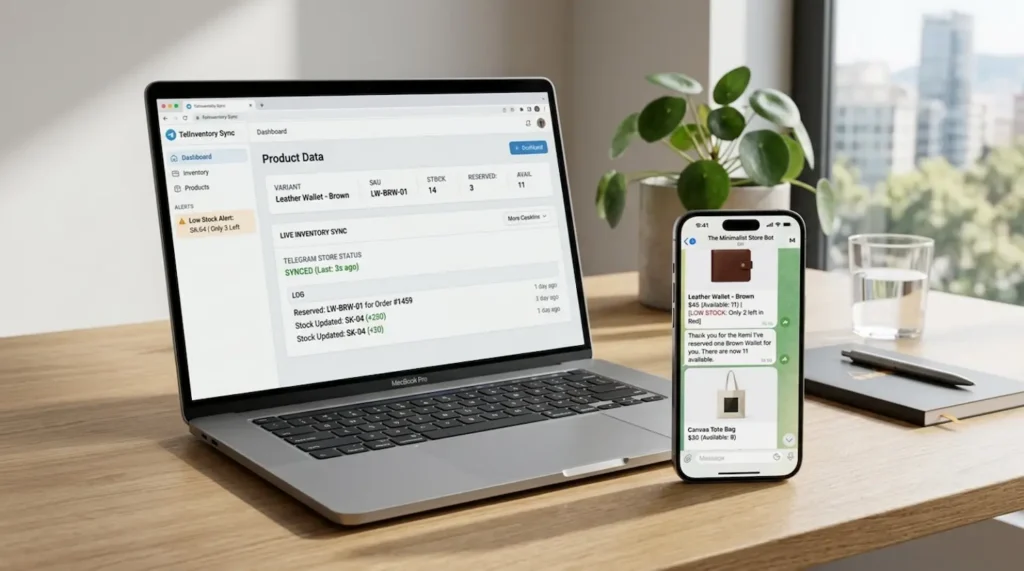
    Telegram inventory management dashboard with product variants, reserved stock, and real-time inventory updates

    Prevent overselling without making the store harder to run

    The goal is not to build a heavy, over-engineered system.

    The goal is to make your Telegram store more reliable without slowing the team down.

    That usually means:

    • cleaner catalog structure
    • clearer stock rules
    • better order-state logic
    • fewer manual interventions
    • better visibility into what is available right now

    If you already have a live store, start with the products that create the most support load or the most sales. Fixing inventory logic on your top-moving items often gives you the fastest operational win.

    If you are still setting up, this is the right moment to define the rules before growth exposes the weak points.

    Build a Telegram store that can say “in stock” with confidence

    Good telegram inventory management is not about making your backend look impressive. It is about protecting conversion, trust, and operational control.

    If customers can move from product discovery to payment quickly, your stock logic needs to move just as cleanly behind the scenes.

    That is what prevents overselling.

    And that is what helps a Telegram store feel reliable as order volume grows.

    If you want a faster path to the right store structure, checkout flow, payment setup, and operational logic, complete the Trapyfy Store Onboarding Intake and map your setup before stock problems start costing you sales.

  • Customer Support for Telegram Stores: SLA, Macros, and Routing

    Customer Support for Telegram Stores: SLA, Macros, and Routing

    A Telegram store can feel fast and personal at the beginning. That is part of the appeal. But as orders grow, teams usually realize they need a clearer support system. That is where Telegram customer support automation becomes essential.

    That is where many teams run into the same problem. They set up catalog, checkout, payments, and promotions, but support still depends on whoever is online, whoever remembers the context, or whoever can scroll fast enough through chats.

    That works for a while. Then it starts slowing sales, increasing repetitive work, and creating inconsistent buyer experiences.

    If you want Telegram customer support automation that actually helps the business, you need more than auto-replies. You need clear response standards, reusable macros, and routing rules that decide what gets solved automatically, what gets escalated, and what needs human attention right away.

    This is how to build that system.

    Why support in a Telegram store affects more than support

    Support in Telegram is not only a post-purchase function.

    It influences:

    • checkout completion
    • trust before payment
    • order clarity after payment
    • refund confidence
    • repeat purchase behavior
    • support workload per order

    In practice, support touches revenue more often than teams expect.

    A delayed reply about payment can stop a purchase. A vague answer about delivery can increase refund risk. A slow status update can create follow-up messages that multiply the support queue.

    That is why support should be treated like part of store operations, not as a side task after launch.

    If you already know how to create a Telegram shop without coding, this is the next layer that determines whether the store will actually feel reliable once traffic and orders increase.

    What good telegram customer support automation actually looks like

    Good support automation does not try to remove human support completely.

    It does three things instead:

    1. It resolves predictable requests faster.
    2. It routes high-risk issues to the right person sooner.
    3. It keeps the customer from wondering what happens next.

    That usually means:

    • standard replies for repeated scenarios
    • clear prioritization rules
    • visible handoff points
    • fewer status questions
    • less dependency on memory or chat history

    A strong Telegram bot store should not force your team to manually answer the same payment, shipping, and status questions every day.

    Start with SLA before you automate anything

    Most teams jump straight into templates and bots. The better order is the opposite: decide response expectations first.

    SLA does not need to be complicated. In a Telegram store, it simply means defining how fast different issue types should be acknowledged and how fast they should be resolved.

    Without that, macros become random and routing becomes reactive.

    A simple support SLA structure for Telegram stores

    You can start with four practical categories:

    1. Pre-sale questions

    Examples:

    • product details
    • availability
    • pricing clarification
    • compatibility or fit

    These usually need a fast first reply because they affect conversion directly.

    2. Checkout and payment issues

    Examples:

    • payment not going through
    • confirmation not received
    • duplicate payment concern
    • buyer unsure how to complete purchase

    These are high-priority because they sit closest to revenue. They also connect directly with how you accept payments in Telegram and how clear the post-payment flow feels.

    3. Post-purchase operational questions

    Examples:

    • where is my order
    • when will it ship
    • how do I access the product
    • can I update shipping details

    These should be handled through clear order communication first, then support if needed. The cleaner your Telegram order tracking flow, the less repetitive load support will absorb later.

    4. Exception cases

    Examples:

    • refund request
    • damaged item
    • missing delivery
    • account issue
    • policy dispute

    These need the clearest routing because they affect trust and often require human judgment.

    What “good enough” SLA looks like

    You do not need enterprise complexity. You need consistency.

    For most Telegram stores, a strong early setup looks like:

    • fast acknowledgment for payment and checkout issues
    • same-day handling for standard operational questions
    • clearly defined escalation path for refund or dispute cases
    • a maximum response window that the whole team understands

    If customers know when they will hear back, support already feels better.

    Build macros for the messages that repeat every day

    Macros are one of the fastest ways to reduce support load without making support feel robotic.

    The mistake is writing macros like canned replies that could apply to anything. Good macros sound specific, helpful, and action-oriented.

    A macro should do at least one of these:

    • confirm status
    • explain next step
    • reduce uncertainty
    • set expectation
    • move the case into the right queue

    Macro examples worth building first

    Payment received

    Use when payment is complete and the next step is clear.

    Purpose:

    • confirm success
    • reassure the buyer
    • explain what happens next

    Payment pending review

    Use when there is a temporary delay or mismatch.

    Purpose:

    • stop repeated follow-ups
    • acknowledge the issue
    • set the time window for recheck

    Order in progress

    Use when the order is paid but not yet fulfilled.

    Purpose:

    • reduce “where is my order?” messages
    • confirm the order is active
    • give a realistic timeline

    Shipping update

    Use when the store has a new fulfillment milestone.

    Purpose:

    • keep the buyer informed
    • reduce manual tracking questions
    • support trust after payment

    Product unavailable or delayed

    Use when stock or fulfillment changes.

    Purpose:

    • communicate clearly
    • avoid vague apologies
    • offer the next best path

    Human follow-up required

    Use when the case needs manual review.

    Purpose:

    • reassure the buyer they are not being ignored
    • explain that a person will step in
    • set expectation on timing

    How to write support macros that do not sound robotic

    This matters more than most teams think.

    A macro should not sound like a policy document pasted into chat. It should sound like a fast, clear answer from a competent support team.

    Use this formula:

    Context + status + next step + timing

    For example:

    • what happened
    • what the customer should expect
    • whether action is needed
    • when the next update will happen

    That structure reduces confusion better than long explanations.

    It also helps when your store is still balancing automation with the more manual parts of operations. If you are already seeing the limits of manual Telegram selling, macros are often one of the first upgrades that create immediate relief.

    Routing is what turns support into a system

    Macros save time. Routing creates control.

    Routing means deciding where a conversation should go based on issue type, urgency, and business impact.

    Without routing, everything lands in the same place. That usually creates one shared inbox, one overloaded operator, and one queue where urgent payment or refund issues wait next to simple catalog questions.

    The simplest routing logic for a Telegram store

    A practical support routing model usually looks like this:

    Route 1: Self-serve or auto-resolved

    Best for:

    • FAQ questions
    • standard policy clarifications
    • order status updates
    • repeat instructions
    • basic product availability checks

    These are cases where automation, macros, or guided flows should handle the first layer.

    Route 2: Assisted support

    Best for:

    • checkout hesitation
    • payment mismatch
    • fulfillment clarification
    • edit request before shipment
    • customer confusion that blocks the order

    These should reach a human quickly, but with context already attached.

    Route 3: Escalated cases

    Best for:

    • refund disputes
    • delivery failure
    • repeated payment issues
    • policy conflict
    • VIP or high-value customer issue

    These need the cleanest ownership and should never sit in the same queue as routine questions.

    Support workflow for a Telegram store with order and customer message management

    Route by urgency, not just by topic

    Two customers can ask about the same order and still need different treatment.

    A pre-sale buyer asking one product question is different from a buyer who already paid and believes something went wrong.

    That is why routing should consider:

    • payment status
    • order status
    • value at risk
    • dispute risk
    • time sensitivity

    This matters especially when your store is trying to reduce drop-offs. A slow reply during checkout can contribute to the same friction that later shows up as Telegram abandoned checkout.

    Support routing is not only about inbox organization. It protects conversion.

    Decide where automation should stop and humans should take over

    Not every issue should be automated all the way through.

    The best support workflows use automation for speed and humans for judgment.

    A good handoff point usually happens when:

    • the issue affects money
    • the issue affects trust
    • the customer needs a non-standard answer
    • the policy needs interpretation
    • the case has repeated back-and-forth already

    The goal is not to force every issue through automation. The goal is to keep automation useful and human support focused on the cases where it matters most.

    Build support around the full store workflow

    Support quality improves when it is connected to the rest of the store, not isolated from it.

    In a strong Telegram store workflow, support should be linked to:

    • catalog clarity
    • checkout design
    • payment confirmation
    • order status visibility
    • policy communication
    • post-purchase messaging

    This is why support should not be planned after the store is already live. It should be part of the operating model from the beginning.

    That is also one reason teams comparing tools should care about how a Telegram shop builder handles store logic, not only storefront setup.

    Common mistakes that make Telegram support feel chaotic

    1. One inbox for everything

    When payment issues, refund requests, order updates, and product questions all land in the same queue, priorities disappear.

    2. No first-response standard

    If the team has no agreed response window, customers experience support quality as random.

    3. Macros with no next step

    A short reply without timeline or action only creates another message.

    4. Support relying on memory

    If your team needs to remember which customer was promised what, the process is already too fragile.

    5. Routing by whoever is free

    That may work early, but it breaks fast once order volume increases.

    6. No link between support and operations

    If support cannot see payment state, order state, or fulfillment stage, the customer gets delayed answers even when the team is trying to help.

    Metrics to track every week

    You do not need dozens of support dashboards. You need a few useful numbers that show where friction is building.

    Track:

    • first response time
    • resolution time
    • support messages per order
    • payment issue volume
    • order status question volume
    • refund-related case volume
    • reopened conversations
    • checkout-related support before purchase

    These numbers help you answer practical questions:

    • Are customers confused before paying?
    • Are order updates clear enough?
    • Are macros actually reducing repeated questions?
    • Are escalations being handled fast enough?

    A Telegram store becomes easier to scale when support data tells you where the process is weak.

    When to improve automation before hiring more support

    Many teams try to solve support load by adding more people too early.

    That is not always the best first move.

    Improve automation first when:

    • the same questions repeat daily
    • payment and order updates are not clear enough
    • macros are missing or poor
    • routing is inconsistent
    • support load spikes after checkout, not because of complex cases, but because of unclear communication

    Hire or expand support when:

    • escalations are increasing
    • complex cases require judgment often
    • sales volume already justifies stronger coverage
    • the process is clear, but human capacity is still the bottleneck

    In other words: automate the predictable, staff the exceptions.

    Support should feel like part of the store, not damage control

    The strongest Telegram stores do not wait for support to become a problem.

    They treat support as part of conversion, trust, and retention from the start. That means clear SLAs, useful macros, smart routing, and a workflow that tells customers what is happening before they need to ask.

    That is what support automation should really do. Not just answer faster. Make the whole store feel more reliable.

    If you want to build a Telegram store that handles support, payments, order flow, and operations with less manual friction, complete the Trapyfy Store Onboarding Intake and map a setup that fits your store before support chaos becomes part of the customer experience.

  • When You’ve Outgrown Manual Telegram Selling: 7 Signs It’s Time to Automate

    When You’ve Outgrown Manual Telegram Selling: 7 Signs It’s Time to Automate

    At the beginning, manual Telegram selling can feel manageable.

    You answer product questions yourself, confirm payments one by one, send order updates when customers ask, and keep stock in a spreadsheet that mostly works. For a small number of orders, that setup can even feel flexible. You stay close to customers, you see every conversation, and you do not need to think much about systems yet.

    But there is a moment when “manageable” quietly becomes expensive.

    Not because your business is failing. Usually the opposite. Orders start coming in more often. More people ask the same questions. More customers reach checkout but do not finish. More payment confirmations pile up. More follow-ups depend on whether someone on your team remembers to send them.

    That is usually the real turning point. The issue is no longer whether Telegram can sell. It is whether your workflow can keep up.

    If your goal is to grow a real Telegram Bot Shop instead of running sales through memory, screenshots, and manual follow-ups, these are the clearest signs that it may be time to automate.

    Why manual Telegram selling works until it doesn’t

    Manual selling often survives longer than it should because the first version feels lean.

    You can launch quickly. You can test demand. You can learn what customers ask before building anything more structured. For early validation, that is not a weakness. It is often the fastest way to prove there is real buying intent.

    The problem starts when the same manual habits remain in place after the store already deserves better infrastructure.

    That is when simple tasks begin to create hidden costs:

    You answer the same support messages every day.
    You confirm payments manually even after volume increases.
    You update stock too late.
    You lose track of which orders need action.
    You recover fewer buyers than you should after checkout drop-off.

    At that stage, the problem is not effort alone. It is lost revenue, slower operations, and a customer experience that becomes less consistent as you grow.

    This is where telegram store automation stops being a nice extra and starts becoming operationally necessary.

    1. You confirm payments manually more often than you should

    One of the first warning signs is how much time your team spends just verifying whether an order is really paid.

    When that process depends on checking screenshots, matching names, reviewing payment notifications manually, or replying one customer at a time, the store becomes slower than it needs to be. It also creates avoidable uncertainty for buyers.

    Customers want a simple sequence: select product, pay, receive confirmation, know what happens next.

    If your current setup makes that feel inconsistent, trust drops fast. This is also why the ability to accept payments in Telegram cleanly matters so much. The payment step is not only financial. It shapes confidence.

    2. Your order status lives in chats, not in a real workflow

    A store becomes fragile when order handling depends on chat history.

    If you have to scroll conversations to remember whether something was already paid, packed, sent, or delivered, you do not really have order management. You have fragmented memory.

    That creates problems fast:

    • orders get delayed
    • support answers become inconsistent
    • fulfillment depends on who is online
    • customers ask again because the status is unclear

    Once this starts happening regularly, you need a cleaner structure for Telegram order tracking and post-payment workflow.

    A growing store cannot rely on “I think we already handled that.”

    3. Stock updates happen too late

    Overselling does not always happen because demand is huge. Sometimes it happens because inventory visibility is weak.

    Manual Telegram selling often handles stock reactively. A product is sold, someone forgets to update quantity, another customer buys it, and now the business has to apologize, refund, or improvise.

    That creates friction on both sides:
    the customer loses confidence, and your team loses time fixing a preventable issue.

    This is one of the clearest signs that your store has outgrown a manual setup. Inventory does not need to be dramatic to hurt conversion. It only needs to be unreliable.

    4. Customer support is repetitive and always urgent

    If the same questions appear every day, support is giving you a roadmap.

    Questions like:
    Where is my order?
    Was my payment received?
    How long is delivery?
    Do you still have this item?
    Can I change my order?

    Those messages are not only support requests. They are signals that the store is missing better communication and better automation.

    Manual support creates two problems at once. First, it steals time from sales and operations. Second, it trains customers to wait for a person instead of trusting the system.

    That is where telegram store automation helps most: not by removing human support, but by reducing the number of predictable messages that should never require manual attention in the first place.

    5. Checkout drop-off is becoming harder to recover

    A buyer can be interested and still disappear.

    That is normal in ecommerce. But when the checkout flow in Telegram depends too much on manual follow-up, abandoned buyers slip away faster than they should. No one has time to chase every partial intent one by one.

    Weak recovery also makes Telegram abandoned checkout more expensive than it looks. It is not only a conversion issue. It is a workflow issue.

    If your store cannot consistently trigger the right reminders, confirmations, or next-step messages after a buyer hesitates, then every missed checkout becomes harder to recover at scale.

    6. Your team cannot see what is working every week

    Manual setups often produce activity, but not clarity.

    You may know that orders are happening. You may feel busy. But that does not mean you know:

    • where customers drop off
    • which products convert best
    • which messages help close a sale
    • which payment points create friction
    • which repeat buyers are worth nurturing

    That lack of visibility becomes a serious bottleneck once you want to improve results intentionally instead of just reacting.

    Growth gets easier when your store gives you data you can use, not just conversations you can search through later.

    7. The business depends too much on one person

    This is one of the most dangerous stages because it often looks efficient from the outside.

    One founder knows the products. One operator knows how orders move. One support person knows which messages to send. One team member remembers which buyers need follow-up.

    It works until that person is unavailable, overloaded, or simply misses something.

    If a store depends too heavily on one person’s memory, your business is more fragile than it looks. A real store should run through systems, not heroic effort.

    That is usually the strongest sign that manual Telegram selling has reached its limit.

    Telegram store automation workflow for teams moving beyond manual Telegram selling

    What to automate first in a Telegram store

    Not everything needs to be automated at once.

    The smartest move is usually to start with the points where friction repeats every day and where delay directly affects trust or conversion.

    In most stores, that means:

    • payment confirmation
    • order status updates
    • stock visibility
    • checkout recovery
    • post-purchase messaging
    • repeated support answers

    This is the point where many teams stop comparing effort alone and start comparing systems.

    It is also where decisions around Telegram shop pricing become more practical. The cheapest setup is not always the one with the lowest monthly cost. It is the one that removes enough manual work to protect sales, time, and customer confidence.

    When manual selling is still fine

    Not every store needs automation immediately.

    If you are validating a new offer, processing very low order volume, and still learning how customers buy, manual selling can be a smart temporary phase. It keeps the feedback loop close and the setup light.

    The mistake is not starting manually.

    The mistake is staying manual after the workflow already shows clear friction.

    There is a big difference between an early-stage test and an operating model that is quietly limiting growth.

    Manual vs automated: what really changes

    The biggest shift is not just speed. It is consistency.

    With a more automated setup, the store can:

    • confirm actions faster
    • reduce repetitive support
    • give buyers clearer next steps
    • lower operational mistakes
    • make weekly optimization easier
    • create a more reliable buying experience

    That does not mean everything becomes hands-off. It means the team spends less time patching the process and more time improving it.

    If you are already weighing platform decisions, that is also why some businesses start comparing structured solutions against custom Telegram bot development. The real question is not whether something can be built. It is whether it can be run, improved, and scaled without unnecessary friction.

    The store that grows should not depend on memory

    Manual Telegram selling can help you start fast. It should not be the reason growth becomes harder later.

    Once payments, support, stock, follow-ups, and order handling begin to rely too much on memory and manual effort, the issue is no longer hustle. It is system design.

    A better setup does not just save time. It protects trust, reduces avoidable errors, and gives your business a cleaner path to scale.

    If that is where your store is now, the next useful step is simple: complete the Trapyfy Store Onboarding Intake and map a setup that helps you launch, manage, and grow without carrying the whole workflow by hand.

  • What a Telegram Shop Builder Should Include (Feature Checklist)

    What a Telegram Shop Builder Should Include (Feature Checklist)

    If you want to launch a Telegram Bot Shop without turning every small change into a developer task, choosing the right builder matters more than most teams expect.

    A lot of tools can help you create menus, automate replies, or connect simple bot actions. That is not the same as having a real e-commerce setup. A proper Telegram shop builder should help you move from product discovery to checkout, payment, order handling, and follow-up without breaking the customer experience.

    That is where many teams get stuck. They pick a tool that looks easy at the beginning, then realize they still need manual payment confirmations, spreadsheet-based order tracking, or extra work every time they add a product, update pricing, or fix a checkout step.

    If your goal is to launch fast and sell with less friction, these are the Telegram shop builder features you should expect from day one.

    Why the right Telegram shop builder matters

    A Telegram store is not just a bot with buttons.

    It is a sales system inside chat. That means the builder you choose affects how quickly you can launch, how easily customers can buy, how much manual work your team carries, and how easy it will be to improve performance later.

    The wrong setup usually creates one of two problems:

    • the store launches fast, but operations become messy
    • the store is technically powerful, but too slow or complex to launch

    The right balance is a builder that keeps setup simple without sacrificing the parts that actually drive revenue: catalog clarity, checkout speed, trusted payments, order visibility, and post-purchase communication.

    If you are still early, this is also the stage where it helps to learn how to create a Telegram shop without coding before adding more complexity.

    What makes a Telegram shop builder different from a generic bot tool

    A generic bot tool can automate messages. A real shop builder needs to support commerce.

    That means it should help you manage the full buying journey:

    • product browsing
    • category structure
    • variant selection
    • checkout flow
    • payment confirmation
    • order updates
    • customer support touchpoints
    • repeat purchase opportunities

    If a platform only helps you build menus and simple bot logic, you may still end up doing the most important ecommerce work by hand.

    That is why a serious Telegram bot store setup should be judged like a revenue channel, not like a chatbot experiment.

    Telegram shop builder features you should expect from day one

    1. No-code setup that does not break every time you need a change

    A no-code Telegram shop builder should let you launch without relying on custom development for every update.

    That includes things like:

    • adding or editing products
    • changing prices
    • updating categories
    • adjusting checkout steps
    • updating messages and flows

    If basic edits still require technical help, the tool may be marketed as simple, but it is not operationally simple.

    2. Product catalog management built for fast decisions

    A store without a clean catalog creates hesitation.

    Your builder should let you organize products in a way that feels obvious on mobile:

    • clear categories
    • short product names
    • easy variant selection
    • visible pricing
    • concise descriptions focused on the buyer decision

    A messy catalog slows down everything. This is also why your telegram store product catalog structure deserves real attention, not just a quick upload of products.

    3. Checkout flow that feels short, clear, and trustworthy

    Checkout is where interest becomes revenue.

    A strong builder should help you create a checkout that is:

    • short
    • mobile-friendly
    • easy to understand
    • clear about what happens next

    Good checkout design usually means fewer fields, one clear action per step, visible totals, and an instant confirmation after payment.

    If you want buyers to move quickly, the builder should reduce friction, not add more clicks.

    4. Payment integrations your customers already trust

    One of the biggest decision filters is simple: can the store support the payment methods your audience actually wants to use?

    A Telegram shop builder should make it easier to accept payments in Telegram without turning payment status into a manual support problem.

    Look for a setup that helps you handle:

    • trusted payment methods
    • clear payment confirmation
    • failed payment recovery
    • post-payment communication

    If the payment experience feels uncertain, conversion suffers even when the product offer is strong.

    5. Order dashboard and status visibility

    After payment, operations start.

    You need to know what was paid, what is pending, what was delivered, and what needs attention. If you cannot see order status clearly, you do not have a scalable workflow. You have hidden friction.

    A good builder should make it easy to track:

    • new orders
    • paid orders
    • pending actions
    • fulfillment stage
    • exceptions that need support

    This matters even more once order volume starts growing.

    6. Automation for repetitive operational work

    A store should not become a manual admin job.

    The right builder should support automation for the moments that repeat every day:

    • new order alerts
    • payment confirmations
    • shipping or delivery updates
    • failed payment reminders
    • post-purchase follow-up
    • re-engagement messages

    This is often the difference between a small team that stays fast and one that spends the day reacting to avoidable tasks.

    7. Analytics that help you improve, not just “report”

    Many tools say they have analytics. What matters is whether the data is useful.

    A builder should help you understand where users drop and what needs fixing. At minimum, you should be able to see:

    • checkout starts
    • completed payments
    • failed payments
    • top products
    • repeat buyers
    • drop-off points in the buying flow

    Without that, you are guessing. And guessing is expensive when you want your first 100 sales with a Telegram store.

    8. Team access and support workflow control

    Even small teams need clarity on who can do what.

    As soon as more than one person touches the store, access control matters. A good builder should support:

    • team roles
    • permissions
    • basic workflow control
    • human support handoff when needed

    This keeps customer experience cleaner and reduces internal confusion.

    9. API and integrations for the next stage of growth

    Not every business needs advanced integrations on day one. But you do not want to rebuild your system just because growth makes your setup more demanding.

    A strong Telegram shop builder should at least leave the door open for:

    • external workflows
    • custom integrations
    • event handling
    • operational extensions

    This is especially important if you are comparing a focused no-code setup against custom Telegram bot development. The question is not only what works now. It is what keeps working when the store becomes more operationally serious.

    10. Security and reliability that support trust

    Customers do not separate “operations” from “trust.” If payment feels unclear or order handling looks inconsistent, confidence drops.

    Look for a builder that treats security and reliability as part of the buying experience, not as a hidden technical detail.

    That includes:

    • secure checkout
    • protected credentials
    • clear order communication
    • stable performance under normal growth

    Red flags to watch before choosing a platform

    Not every builder that looks easy is the right fit.

    Be careful if the tool:

    • focuses more on chat automation than ecommerce flow
    • has weak payment confirmation logic
    • lacks an order dashboard
    • makes you track fulfillment outside the system
    • gives little visibility into conversion or drop-off
    • offers no clean way to manage support or team access
    • looks cheap at first, but adds operational cost later

    A builder should remove complexity, not move it somewhere else.

    A simple way to compare options

    Before choosing a tool, score each platform against this checklist:

    • Can I launch without coding?
    • Can I manage catalog and pricing easily?
    • Can customers check out with low friction?
    • Can I accept payments with confidence?
    • Can I see orders clearly after payment?
    • Can I automate repetitive tasks?
    • Can I track what is working?
    • Can my team operate it without chaos?
    • Can this setup grow without a rebuild?

    If too many answers are “not really,” keep looking.

    That is also a useful way to frame the decision if you are debating Telegram shop vs Shopify or evaluating whether a simpler Telegram-first setup is the better fit for your business model.

    When a no-code Telegram shop builder is the right choice

    A no-code setup is usually the best fit when you want to:

    • launch quickly
    • validate an offer faster
    • reduce technical dependency
    • keep operations lean
    • improve the store weekly instead of rebuilding monthly

    It is especially attractive for small businesses and lean teams that want a real sales flow inside Telegram, not a side project that takes too long to maintain.

    The goal is not just to “have a bot.” The goal is to have a store system you can actually operate.

    Build once. Sell sooner.

    The best telegram shop builder features are not the ones that sound impressive in a sales page. They are the ones that make launching easier, buying smoother, and daily operations lighter.

    That is the real test.

    If a platform helps you go live without coding, handle payments cleanly, manage orders without spreadsheets, and improve performance without constant technical fixes, you are much closer to building a Telegram Bot Shop that can actually grow.

    And if you want a faster path to that setup, complete the Trapyfy Store Onboarding Intake. It is the simplest next step if you want to map the right store structure, checkout flow, payment setup, and operational logic before launch.

  • Telegram Store Product Catalog: How to Structure Categories for More Sales

    Telegram Store Product Catalog: How to Structure Categories for More Sales

    A strong telegram store product catalog helps customers find products faster, understand their options, and move to checkout with less friction.

    That sounds simple, but many Telegram stores lose sales because their catalog is confusing. Categories are too broad, too technical, or overloaded with products that force people to scroll without direction.

    The goal is not to show everything at once. The goal is to make buying feel easy.

    In this guide, you will learn how to structure a telegram store product catalog so it is easier to browse, easier to manage, and more likely to convert.

    Why catalog structure matters in a Telegram store

    In Telegram, the buying flow is more compact than on a traditional ecommerce site. That means navigation has to work harder.

    A messy telegram store product catalog creates friction:

    • users do not know where to start
    • products feel repetitive
    • high-intent items get buried
    • buyers leave before checkout

    A clear catalog does the opposite. It helps users move from interest to action.

    This also connects directly with Telegram Abandoned Checkout, because many drop-offs begin before the payment step. They start when shoppers cannot find the right product quickly enough.

    Organize your catalog around how customers shop

    The best telegram store product catalog is built around buyer behavior, not internal inventory logic.

    Do not group products based only on backend naming or supplier categories. Group them based on how customers think.

    The most effective category models are usually:

    • by product type
    • by use case
    • by audience
    • by popularity
    • by price level

    For example, instead of building a store around internal stock codes, build it around choices customers understand immediately:

    • Best Sellers
    • New Arrivals
    • Bundles
    • Starter Packs
    • Main Product Categories

    This is especially useful when you are trying to grow early traction, as covered in How to Get Your First 100 Sales With a Telegram Store.

    Keep top-level categories simple

    A common mistake is creating too many category options.

    For most stores, 4 to 7 main categories are enough. That gives users structure without overwhelming them.

    A simple model could look like this:

    • Best Sellers
    • Core Category 1
    • Core Category 2
    • Core Category 3
    • Bundles
    • New Arrivals

    That structure works because it gives buyers a fast entry point, clear browsing paths, and a natural place for upsells.

    If your store is still developing, simple navigation often outperforms a “complete” catalog with too many choices.

    Use category names that are instantly clear

    Every category name in your telegram store product catalog should be easy to understand at a glance.

    Good category names are:

    • short
    • specific
    • familiar
    • easy to scan on mobile

    Bad category names are usually vague or too clever.

    For example, instead of:

    • Growth Essentials
    • Performance Line
    • Premium Picks

    Use:

    • Best Sellers
    • Accessories
    • Starter Packs
    • New Arrivals

    Clear labels reduce hesitation. That matters even more in chat-based shopping, where users make quick decisions.

    Put your highest-intent categories first

    Not all categories deserve the same visibility.

    The first categories users see should be the ones most likely to convert:

    • Best Sellers
    • Most Popular
    • Starter Packs
    • New Arrivals
    • High-demand product groups

    Think of your category order as part of your sales strategy. Your telegram store product catalog should guide users toward the easiest buying decisions first.

    This fits naturally with a well-structured telegram bot store for small businesses, where navigation needs to be fast, practical, and mobile-friendly.

    Make room for bundles and cross-sells

    A well-structured telegram store product catalog should also help raise average order value.

    One of the easiest ways to do that is to create categories or sections for:

    • bundles
    • starter kits
    • frequently bought together products
    • premium versions

    This helps users discover related products without feeling pushed.

    For example:

    • Single Product
    • Bundle Option
    • Premium Bundle

    That kind of structure creates better product discovery and cleaner upsell opportunities.

    Build a catalog that is easy to manage

    A catalog is not just for customers. It also affects how easy the store is to run.

    A weak structure makes it harder to:

    • update stock
    • hide sold-out items
    • promote priority products
    • move seasonal offers
    • clean up old inventory

    That is why a strong telegram store product catalog should support both conversion and operations.

    This becomes even more valuable when paired with end-to-end Telegram store automation and a cleaner fulfillment flow like Telegram Order Tracking: A Simple Workflow From “Paid” to “Delivered”.

    Common catalog mistakes to avoid

    Here are the mistakes that hurt performance most often:

    Too many categories

    Too much choice makes the store harder to browse.

    Vague labels

    If users need to guess what a category means, they slow down.

    No “Best Sellers” path

    New visitors need an easy place to start.

    Mixed buyer intent

    Do not put entry-level and premium products in one confusing list.

    No clear bundle logic

    You lose easy upsell opportunities.

    Out-of-stock products still getting attention

    That creates frustration and wasted clicks.

    Weak connection between catalog and checkout

    telegram store product catalog with categories, best sellers, and bundle sections

    A simple checklist for your Telegram store product catalog

    Before publishing or restructuring your store, check this:

    • Can a new user understand the catalog in seconds?
    • Are your main categories based on how people shop?
    • Are your highest-converting categories first?
    • Do you have a Best Sellers or Featured section?
    • Are bundles easy to find?
    • Are category names short and obvious?
    • Is the catalog easy for your team to update?

    If several answers are no, your telegram store product catalog is probably slowing down sales.

    Where better sales often begin

    A better telegram store product catalog does not need more complexity. It needs clearer choices.

    When categories are easy to understand, high-intent products are easy to find, and the path to checkout feels simple, customers move faster and buy with less hesitation.

    That is often where better store performance begins — not with adding more products, but with making the store easier to browse and easier to buy from.

    If you are reviewing your current setup, this is a good place to start: simplify the catalog, improve navigation, and make each category work harder for conversion. And if you want a more structured way to plan your setup, you can start your Telegram store setup with Trapyfy by sharing your products, catalog structure, and store goals.